Filed under: exhibitions, my comics, the beauty of the dead, the old man and the sea | Tags: art, cartoons, comics, graphic novels, illustration

It’s been a while since I’ve posted since I haven’t had a great deal of news lately about the work I’m doing. Strangely this is the product of working very hard and consistently on a project! In this case it’s The Beauty of the Dead which is almost finished; I’m hoping to have it done today in fact. Above you can see my always-cluttered work-space as I finish inking the remaining pages, as well as photos from the New Blood exhibition, one of which shows members of the public apparently interested in my work (not family members planted there by me; I promise!)
The exhibition seems to have gone off without a hitch so far, and it comes down on Monday (4th July). After that it’s all comics all the time for me. I honestly have so many projects I want to pursue right now I don’t even know where to start, including a large-format sci-fi comic, redrafting a novel I’ve sketched about a homeless couple, starting a new one that’s been brewing in my mind for months now about a forbidden love in a modern war-time setting, starting several short-story ideas I have… The list goes on.
Does anyone else ever feel worried that their ideas will start to slip away from them somehow if they don’t grab them and do something with them right now? Does anyone ever feel as though they are pulsing with creative energy but that they have to bring it under control and let it burn slowly over the long period it takes to create comics (or any kind of art)? I hope so. I’m sure I’m not the only one!
Filed under: my comics, the beauty of the dead | Tags: art, cartoons, comics, graphic novels, illustration

H.E. Bates, author of The Darling Buds of May and myriad other novels and short stories, is one of my favourite writers and a great inspiration in my own stories. He creates somber and beautiful little worlds, usually set in little English towns at the turn of the 20th century, and weaves some of the most real and emphatic characters I’ve found in fiction. He is also very strongly visual, and his descriptiveness can make his writing hard to digest at times. However, if we use images, visual description can communicate to a reader simply and instantly, making Bates’ style ideal for the comic-book form.
Hence, right now I’m designing a graphic adaptation of The Beauty of the Dead, a rather dark short story about an elderly woman lying on her death-bed with her husband ‘caring’ for her as the first snow of winter piles up outside. I first came across this story in a tiny library in the Suffolk countryside and I’ve since read it many times, gradually realising that I’d love to create my own interpretation of the story and really materialise the two characters. Additionally the book (The Beauty of the Dead and other stories) is long out of print and quite difficult to get hold of, and perhaps by presenting this story in a new form I can make more people of aware of a fantastic piece of literature.
Over the last week I’ve been going through my extensive process of drafting the story into images, redrafting into a more streamlined sequence, and then going through and figuring out the design and rhythm of every page/spread, linking different parts together visually and making the design appropriate. Currently I’m working on what I suppose is the third draft, which involves quite fully realised pencil roughs, making sure that I know where everything goes within each panel and doing extensive reference drawing to make sure that everything can be drawn accurately.
Above are some character models which help me keep the characters consistent throughout the fifty-odd times I’ll be drawing each of them, along with some of the page plans which I have worked out for every spread.
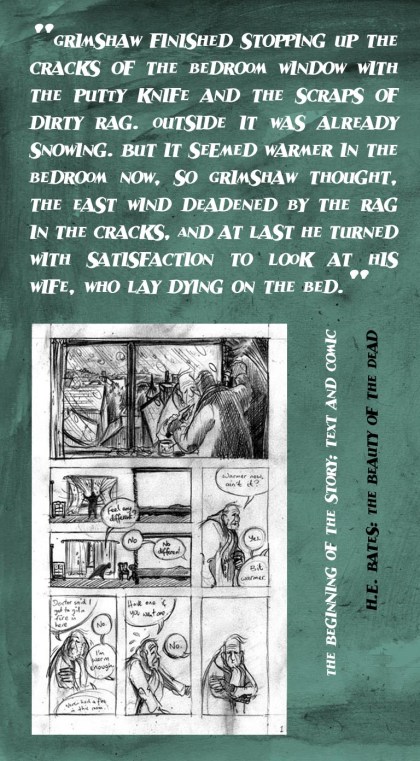
Below you can see the opening paragraph of The Beauty of the Dead along with my first page of third-draft pencil roughs, which I will use as a guide for the finished artwork, which will be identical to the rough, but drawn much larger and more cleanly in ink.
Filed under: my comics, the old man and the sea, translations, under milk wood | Tags: art, cartoons, graphic novels, illustration
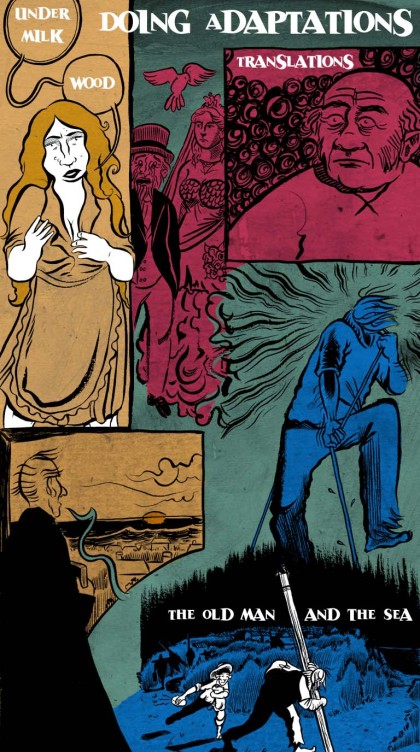
We all know how bad movie adaptations of literature can be, and I’m fairly sceptical about comics adaptations of prose. Regardless, I seem to have produced a few myself over the years, the first being a full-length translation of Brian Friel’s Translations, an excellent play set during the British colonisation of Ireland.
For some reason I thought it would be really simple and appropriate to turn a play into a comic. I couldn’t have been more wrong! Somehow I overlooked the fact that plays are chock-full of dialogue, and my comic became something that at times resembled an illustrated script!
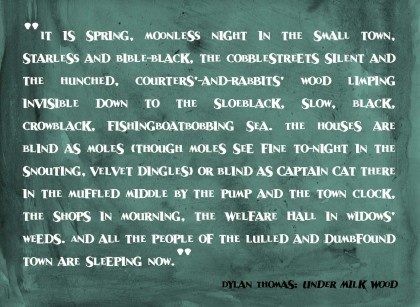
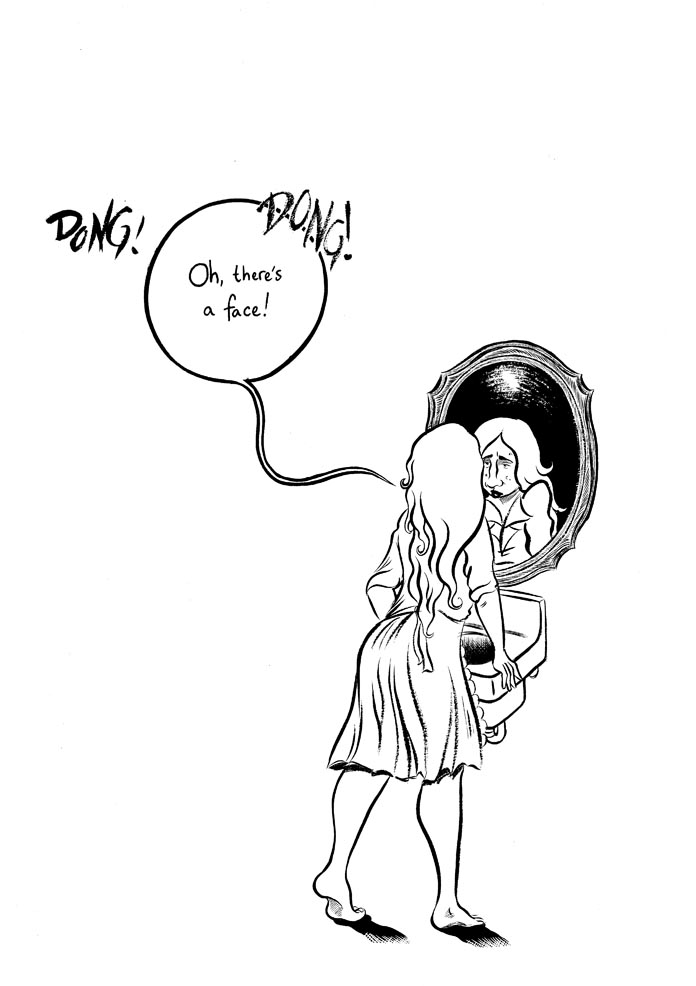
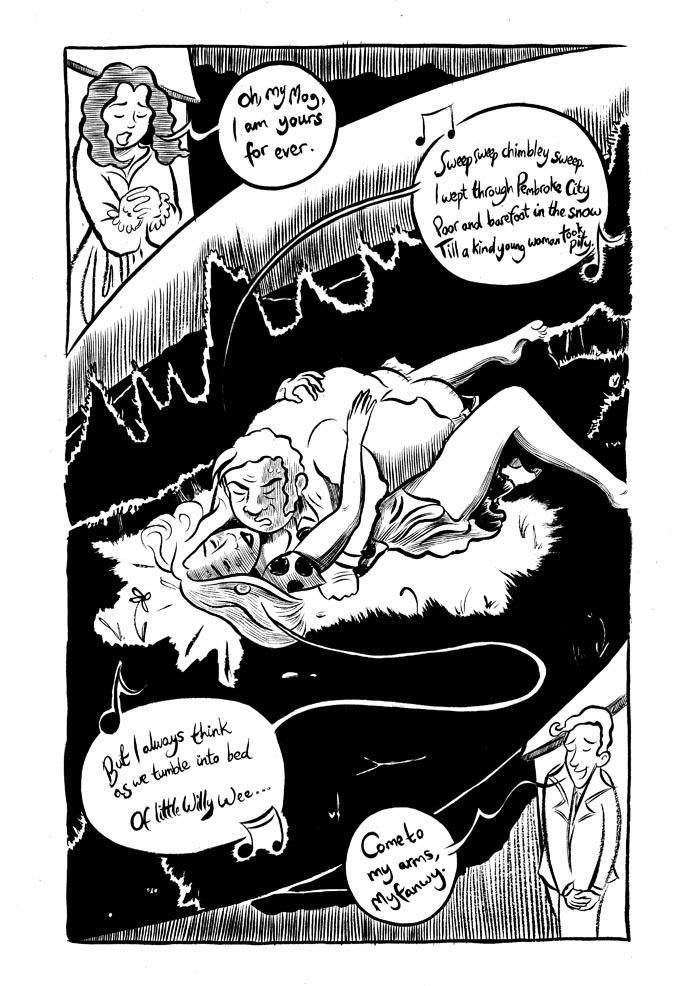
I wasn’t satisfied with doing things the hard way just once, though, and went on next to adapt Dylan Thomas’ Under Milk Wood, a radio play and epic poem set in Llareggub, a fictional town in Wales. I thought it was a beautiful text, and there were so many great characters to draw. I really tried to get the vibe of a little Welsh town and these quirky characters Thomas populates it with.
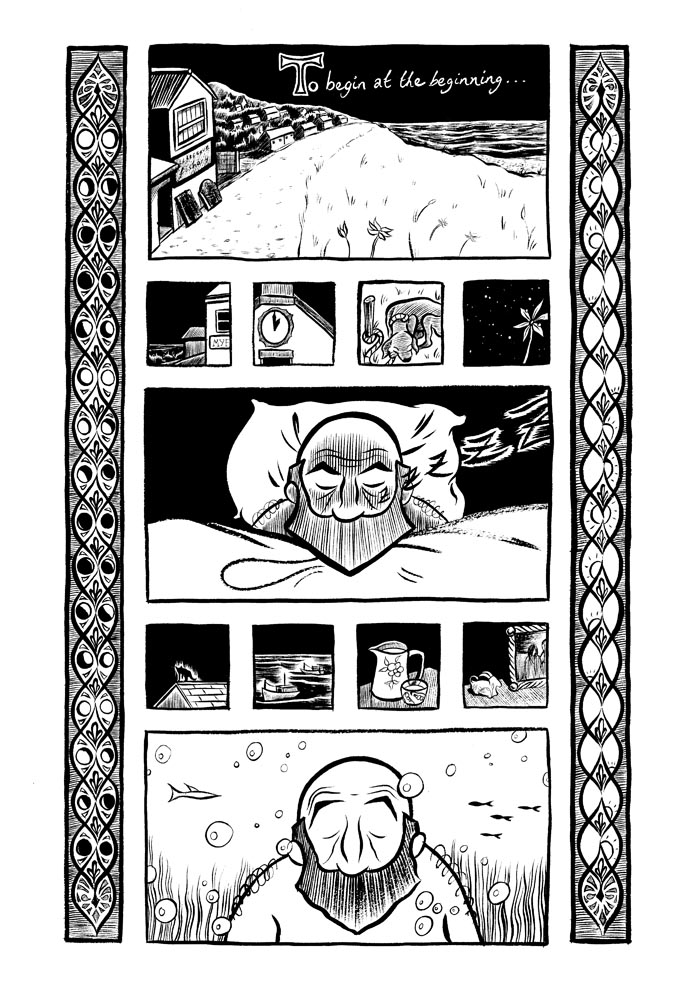

More recently I created a complete but highly abbreviated version of Ernest Hemingway’s The Old Man and the Sea. I compressed 100 pages of text down into 22 pages of comics and, with the story being something of a fable this allowed the strength of the plot to shine through in its most distilled form.
It was tough to work through but very enjoyable. I’ve learnt that making an adaptation comes with many of its own difficulties, not least of which is wishing to keep the piece true to the soul of the original. On the other hand I find that merely illustrating the story leaves a lot to be desired. Instead, what I try to is focus in on particular thematic aspects of a story and really bring those forward, cutting out what doesn’t fit with the ideas I see in the story and perhaps even synthesising new parts when necessary. I cut out quite a few characters from Under Milk Wood, for example, and combined two young female parts to make Lily Smalls (the girl with the bad skin and curly blonde hair) into the emotional focal-point of the comic.
Since I write my own work, too, it’s wonderful to learn from these great writers by analysing their work and retelling it in my own way. As it happens, I’m beginning work on another adaptation just now, of a short story by one of my favourite authors, H.E. Bates, but more on that later.
Filed under: a plague of lighthouse-keepers, my comics, paroxysm | Tags: art, cartoons, graphic novels, illustration

Ahoy-hoy. My name’s Corban Wilkin and I thought I’d use my very first post here to do a quick recap what I’ve been doing with my life recently.
I decided a few years ago and for no good reason that I wanted to make ‘graphic novels’ (also known as ‘big comics’) and, not being one to dream of ‘one-day-maybe-I’ll’ I just up and did it, drawing and publishing my first go at a novel-length story when I was 17.
Well we all have to start somewhere, and I started with 200-pages of scribbles called Wasp and Bee. Nevertheless, being a proud young scribbler I went on to work with writers, producing a fair few comics issues, and working with indy comics publisher Popcorn Peacock.
Last year I published the first two issues of my Paroxysm series, collections of short-story comics written and drawn by me and discovered that comics are hard to do. But I decided to forgo making the third issue in favor of a graphic novel I was planning, which eventually ballooned into a 300-page project. Ever the optimist, I decided to plough into it and try to complete the whole thing before dinner-time.
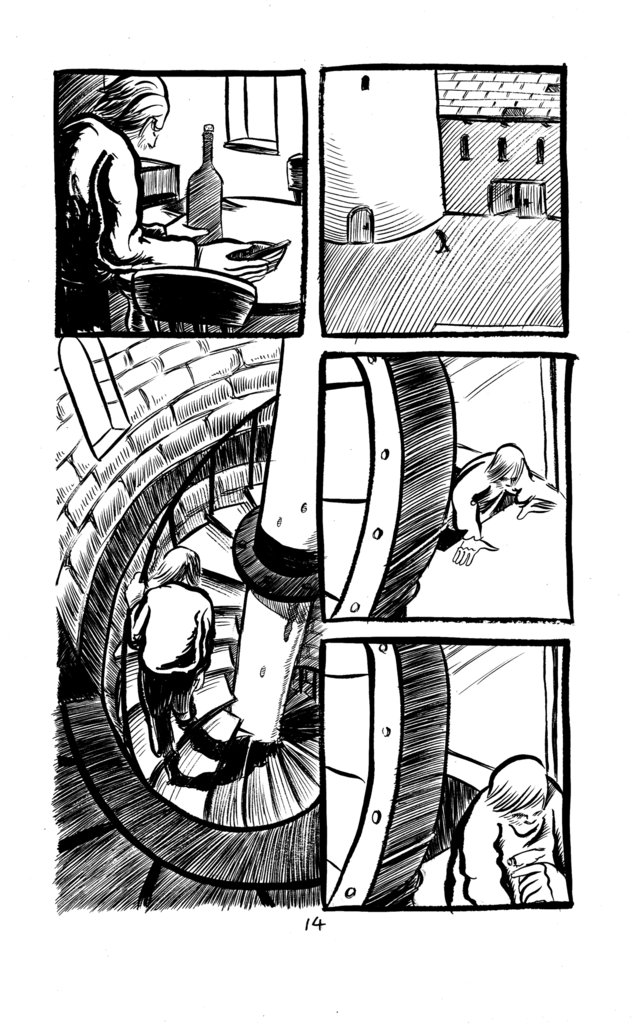
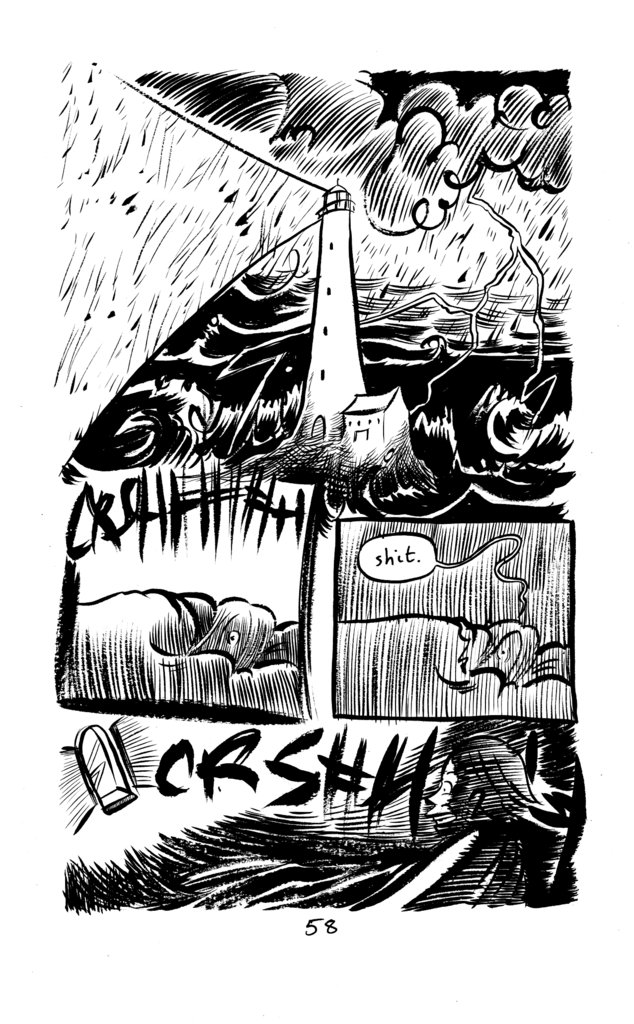

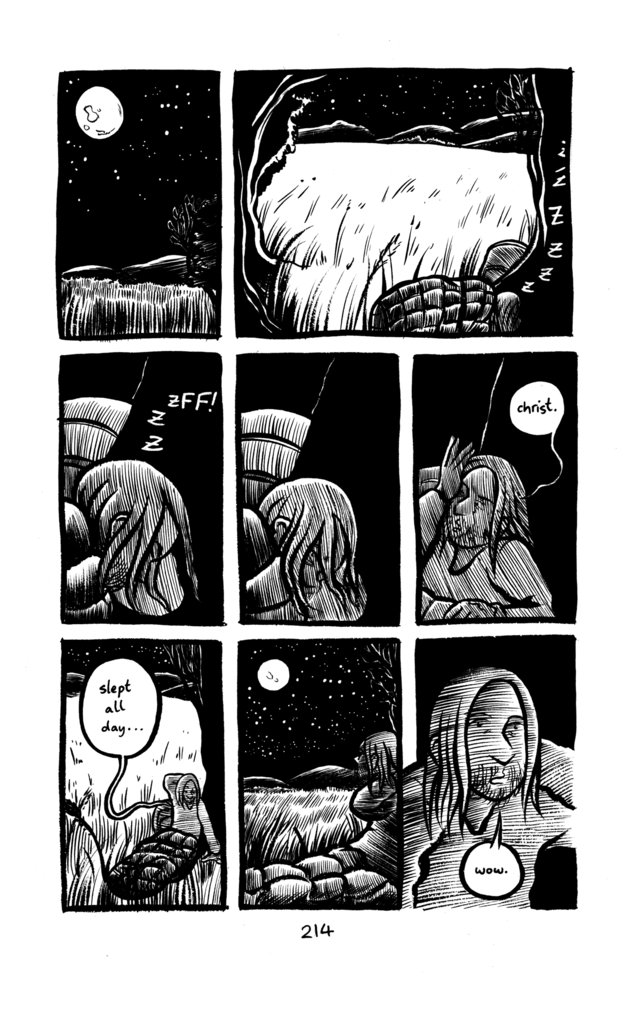
All-together the book took about four months of work, which anyone who’s ever made comics and isn’t Osamu Tezuka will tell you is really too fast for a graphic novel. Honestly, I’m trying to slow down my drawing now so that my work will begin to be of better quality, rather than just rushing out long stories like I have been doing. Still, I’m proud of what I achieved with A Plague of Lighthouse-Keepers.
I will update soon about my recent projects and what’s coming up. I have too much planned to put it in this retrospective post, but check back as I’ll have loads of sketches and comics to bandy about, and I’m sure I’ll end up writing a bunch of nonsense about comics theory and creators I admire, as well.
 Corban Wilkin