Filed under: events, graphic novels, illustration, my antarctica, picturebooks | Tags: antarctica, art, books, cartoons, children's books, comics, drawing, graphic novels, illustration, travel, travel book, travel diary, travel journal, travel sketchbook
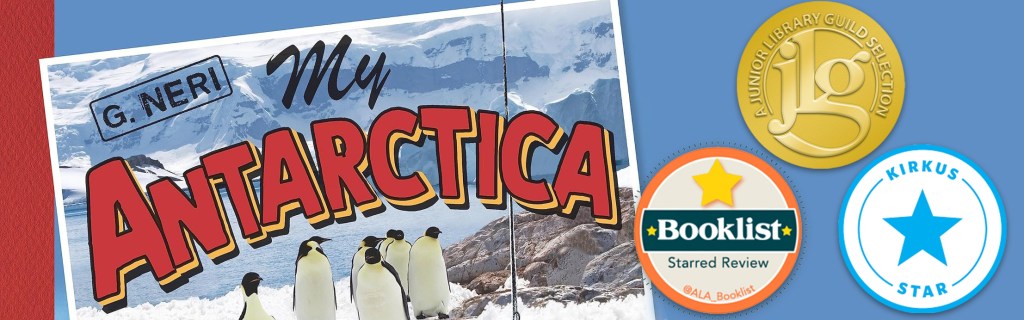
My Antarctica is out today from Candlewick Press and I’m thrilled to announce that not only has it received the prestigious starred review from Kirkus, but also from Booklist, and to top it all has been chosen as a Junior Library Guild Selection.
Thank you to all the people who’ve taken the time to write about this book, including Publishers Weekly, the School Library Journal, and the Bulletin of the Center for Children’s Books.
Written by G. Neri and illustrated by myself, the book takes a modern, personal, and humorous journey into our most mysterious continent.
It’s been a long time coming, and it’s exciting to see this travel-journal-picturebook-graphic-novel finally hit the shelves.
You can find all the places to order your copy on my website or at Penguin Random House.

Filed under: comics, events, graphic novels, writing | Tags: art, books, cartoons, comics, drawing, graphic novels, illustration, writing
Filed under: illustration, my antarctica, picturebooks | Tags: art, books, cartoons, children's books, drawing, graphic novels, illustration, illustrations, picture book, picturebook, travel book, travel diary, travel journal
My Antarctica has just been chosen as one of Kirkus Reviews’ most anticipated books of 2024 and given its first review. Thanks!

Filed under: comics, drawing, graphic novels, writing | Tags: art, awards, book-review, books, comics, fiction, graphic novels, illustration, news, writing
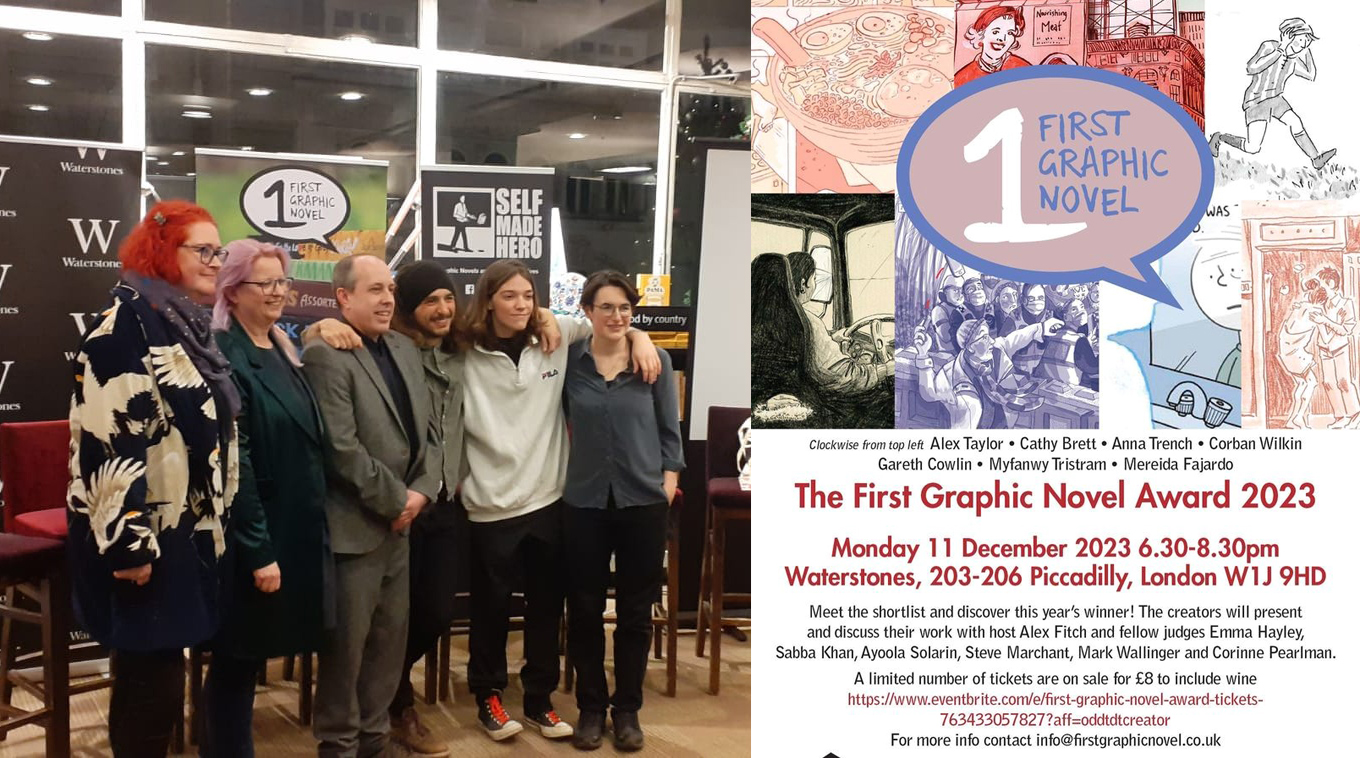
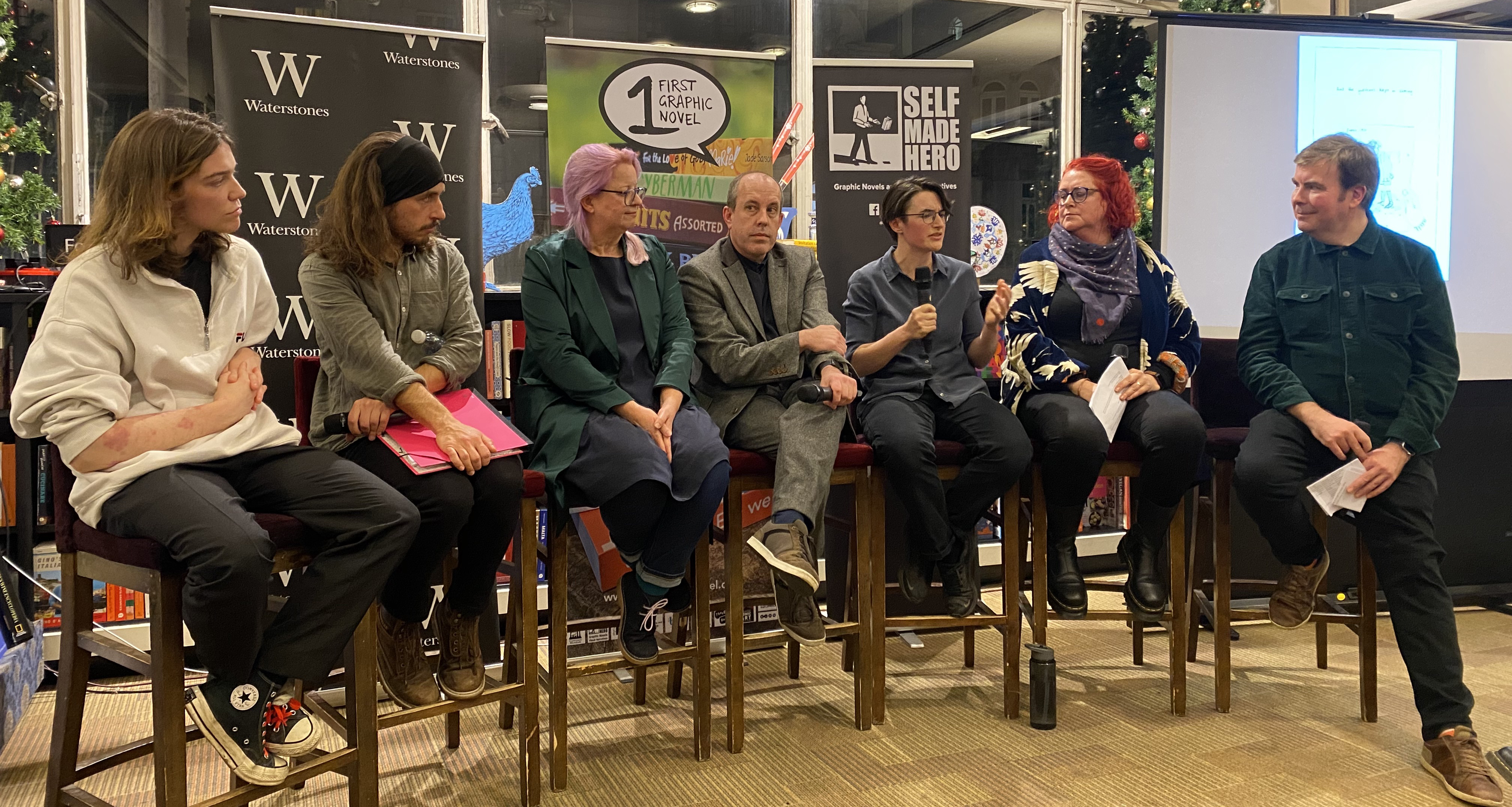
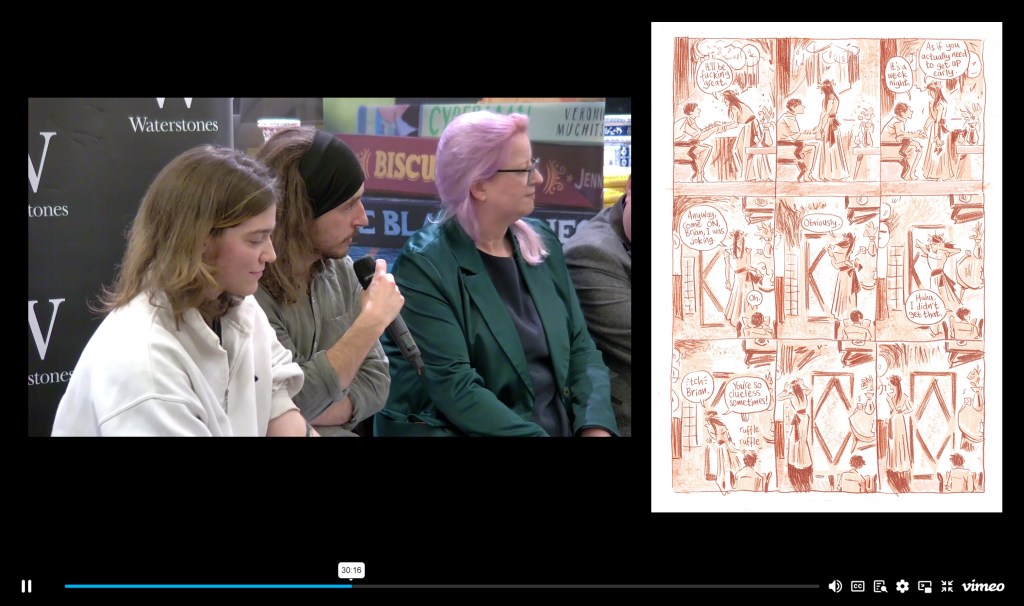
On Monday I had the immense honour of being invited to Waterstones Piccadilly to speak alongside the six other shortlisters for the First Graphic Novel Award on a panel hosted by the inimitable Alex Fitch of Panel Borders, who asked us some pretty challenging and revealing questions about our shortlisted graphic novels.
The insights my fellow shortlisters gave about their books showed how deeply and carefully they have thought about their work and proved once again the wealth of talented, intelligent people who are putting immense amounts of their own time and effort into this complex artform.
After the creators spoke, the seven judges for the award spoke each in turn about one entrant’s work. My entry, The Infinite Benefits of Shame, was addressed with the most incredible care and detail by Ayoola Solarin, for whose words of understanding I am more grateful than I could have imagined.
The award was given to Bone Broth, by the amazingly talented Alex Taylor (azbtart), with whose precocious artistic skill I’ve no doubt will produce a finished book more than worthy of this award. However, I think I speak for all of us when I say that as the seven shortlisters, we were just very lucky to be up there out of 170 entrants to the award.
As I grow older, and especially after hearing the kind and thoughtful words of the judges and other entrants, I’m realising more and more that the point of all this is not selling a book or winning an award: the point is to communicate. I’ve written recently in this journal about how I’m not always as good at meeting and getting to know people as much as I wish I could be. The only reason I write and draw is out of a kind of yearning to communicate, to articulate something that I am trying to understand about myself. I’ve always hoped that by finding a way to share this stuff, there would be people who would be able to read it and feel understood.
All my most profound experiences of art have involved the feeling of being totally understood by the author or artist whose work I’m experiencing. To see articulated by total strangers, in words or images, your own deepest feelings, things which you have not even understood yourself, is the pure magic of art. Our favourite artists seem to understand us more than the people we see every day. And to know that artists sacrifice everything to journey into their own underworld to find this understanding and offer it to the world is what drives me to continue trying my best to do the same.
Gaining a deeper insight into my own motivations for doing this, and experiencing the validation of being championed as one of the final seven, is a reward as great as any win, and I can only humbly thank you all one last time for the work of putting it together.

Thank you Corinne Pearlman, without whom the award would not exist; Emma Hayley, who has invited me along to many cool things over the years; Sabba Khan, who welcomed me so warmly to the event; Mark Wallinger: an unbelievable privilege to have him reading our work; Steve Marchant, who has already taught me and many others so much; Alex Fitch, for his world-class panel-hosting skills; and once again Ayoola Solarin for her support for my entry, which means everything.
Also thank you to James Spackman and the BKS agency, the ALCS, The Cartoon Museum, SelfMadeHero, BBC Radio 4’s Front Row, and to Waterstones for hosting the event! This is all so much more than I deserve and I can’t really express how grateful how I feel. And congratulations once more to the star of the event, Alex Taylor!
The event was a blur of nerves and excitement, but fortunately you can watch the whole thing on Vimeo.
Filed under: comics, drawing, graphic novels, writing | Tags: adult comics, art, award, comics, drawing, first graphic novel award, graphic novel, graphic novels, line drawing, writing
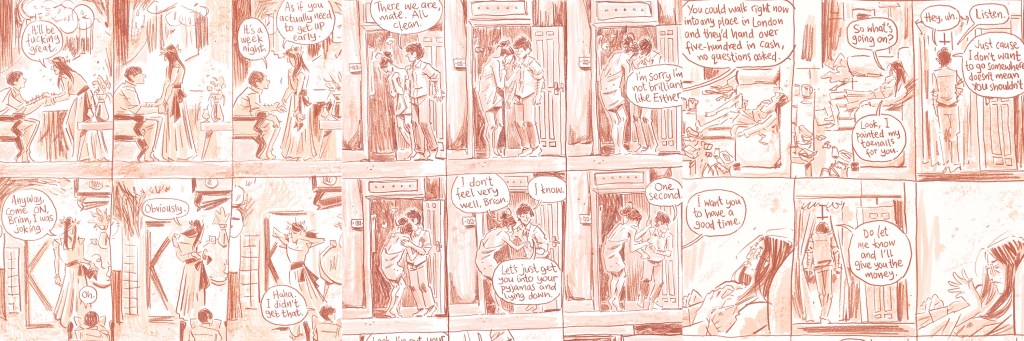
My comic The Infinite Benefits of Shame was shortlisted for the First Graphic Novel Award this weekend at Thought Bubble!
Congratulations to my fellow shortlisters:
Florrie by Anna Trench @anna_trench
The Hiraeth Club by Gareth Cowlin @garethcowlin
Mrs Thorwald by Cathy Brett @gingerdoodles
Zayani Zam by Mereida Fajardo @m.ereida
The Noisy Valley by Myfanwy Tristram @myfanwytristram
Bone Broth by Alexander Taylor @azbtart
Whoever wins, it’s an incredible recognition to have been chosen from among so many entrants and I’ve been humbled by the quality of the other entries.
All of you, who are making personal and deeply-felt work in this ludicrous artform, in this country, in these increasingly-difficult times: you are already winners in my eyes and I love you all for doing what you are doing.
Thanks to the lovely Khadija Osman @k_o_writing and Corinne Pearlman @corinnepearlman for putting together and attending the table (and for the rum)!
And thanks to Chloe Green @okaychloegreen, James Spackman @blackpooltower01 and Zara Slattery @zaraslattery for announcing the shortlist.
Thank you to the judges (and champions of comics): Steve Marchant (plus everyone at @thecartoonmuseum), Emma Hayley (plus everyone at @selfmadehero), Corinne Pearlman @corinnepearlman, comics critic Ayoola Solarin @immortanayo, graphic novelist Sabba Khan @sabbakhanart, artist Mark Wallinger @mark_wallinger_mark, and Alex Fitch at @panelborders for seeing potential in my work.
Plus thanks to @alcs_uk and James and everyone at @bksagency for all they have done to sponsor this award and put it together.
The winner will be announced at Waterstones Piccadilly on Monday 11 December 2023.
Tickets available at Eventbrite.

Filed under: dino detectives, my antarctica | Tags: antarctica, art, cartoons, children's books, documentary, graphic novels, illustration, picturebooks, science
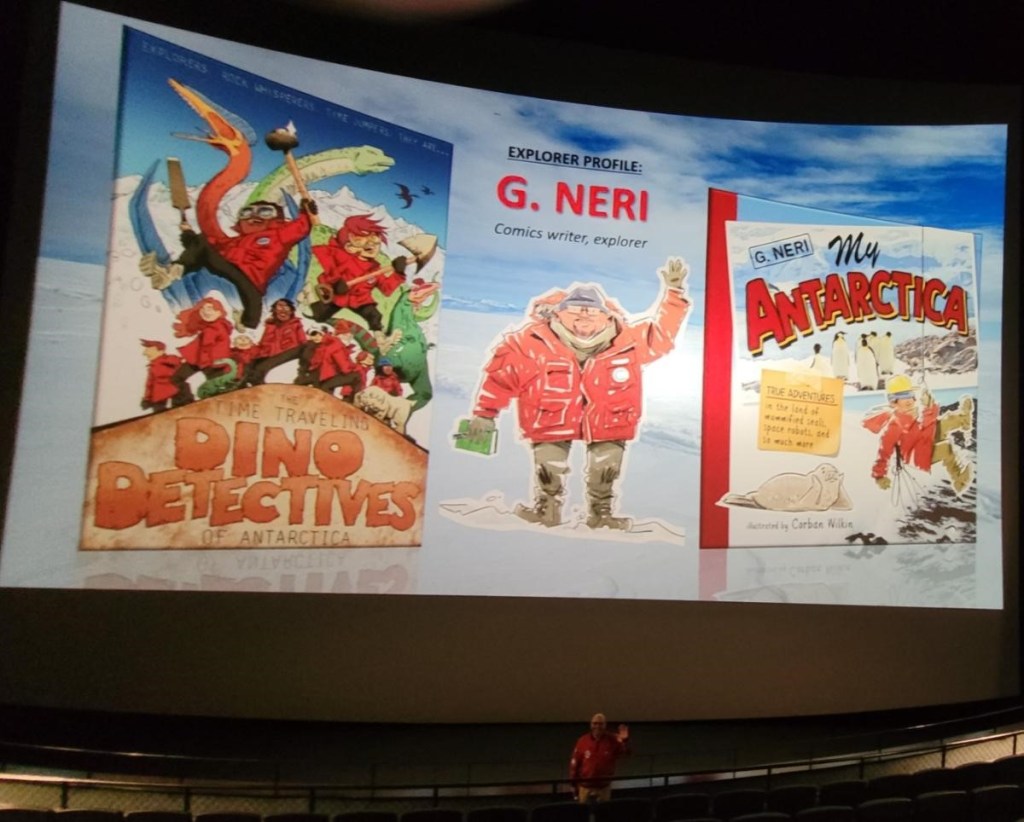
My Antarctica hardcover releases March 2024!
This is the first picturebook I’ve illustrated, and it’s actually a 100-page travel diary. So maybe not a picturebook at all. Or maybe a picturebook like no other.
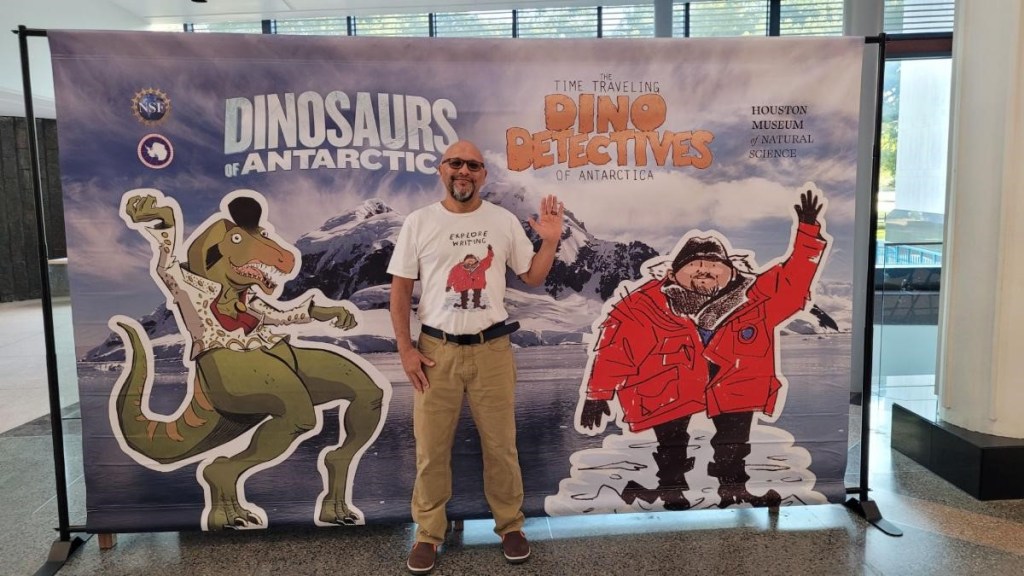
The ever-wayfaring author of the book, G. Neri, got to see both of our Antarctica books up on the big giant screen ahead of the Houston Museum of Natural Science showing Dinosaurs of Antarctica, the sister documentary to our book Dino Detectives, in their Giant Screen Theatre.
Pre-order My Antarctica in the USA from Amazon, Target, or ThriftBooks.
Pre-orders in the UK currently only from Amazon, but watch this space.
Filed under: drawing, graphic novels, illustration, my antarctica | Tags: art, children's books, graphic novels, illustration, publishing

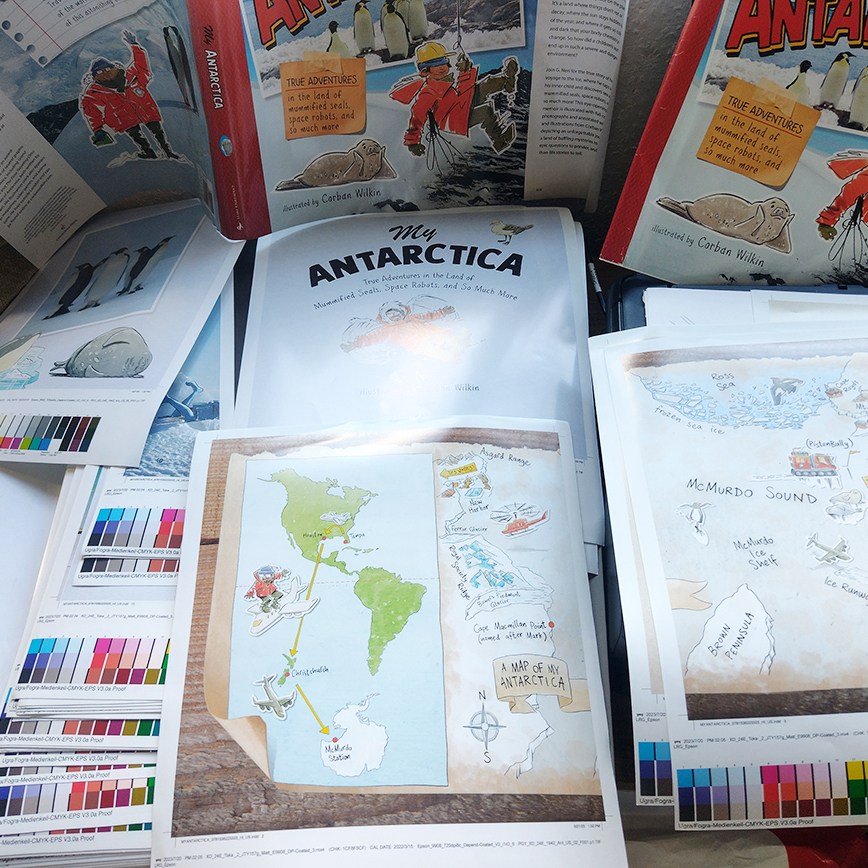
My Antarctica is coming soon from Candlewick Press!
“What’s a proof?“
Glad you asked.
A proof is a printed copy of a book that’s about to be published soon. The author/illustrator takes a look through it and makes sure that the colours look correct, and checks for visual glitches or design misunderstandings. Then, if there’s time, the publisher can change these things at the last minute before the book goes to press.
It’s the best way to make sure an error isn’t printed and bound thousands of times!
I work with proofs a lot in my day job editing images for photo books, and it’s surprising how easy it is for oversights to remain in a book right up until press day. When you’re immersed in a book every day, you become blind to things that might be obvious to someone else.
That’s why it’s so useful to get fresh pairs of eyes on a book at the proof stage.
Pre-order My Antarctica in the USA from Amazon, Target, or ThriftBooks.
Pre-orders in the UK currently only from Amazon, but watch this space.



Filed under: comics, drawing, graphic novels, illustration, my comics | Tags: art, comics, graphic novels, illustration, writing
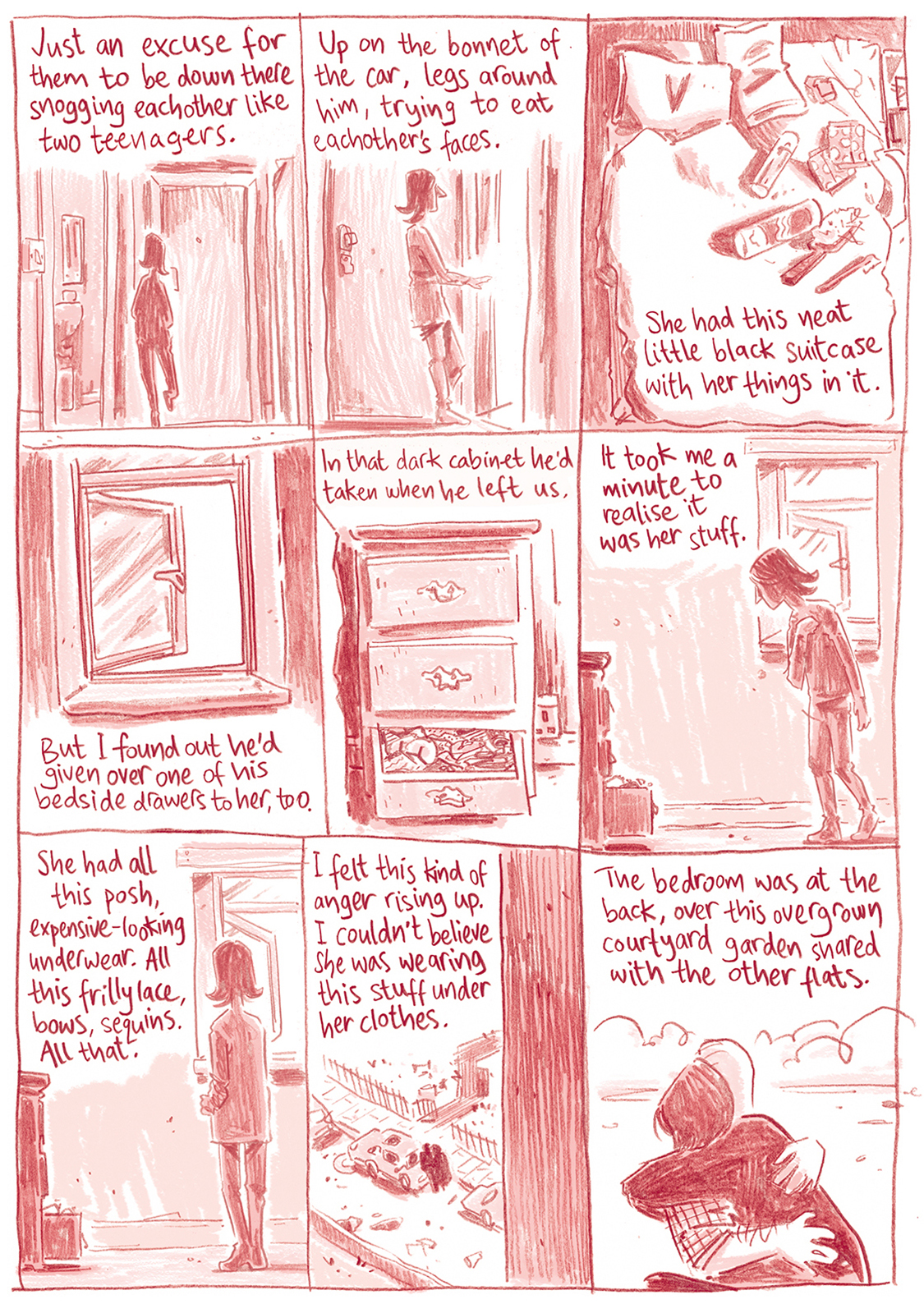

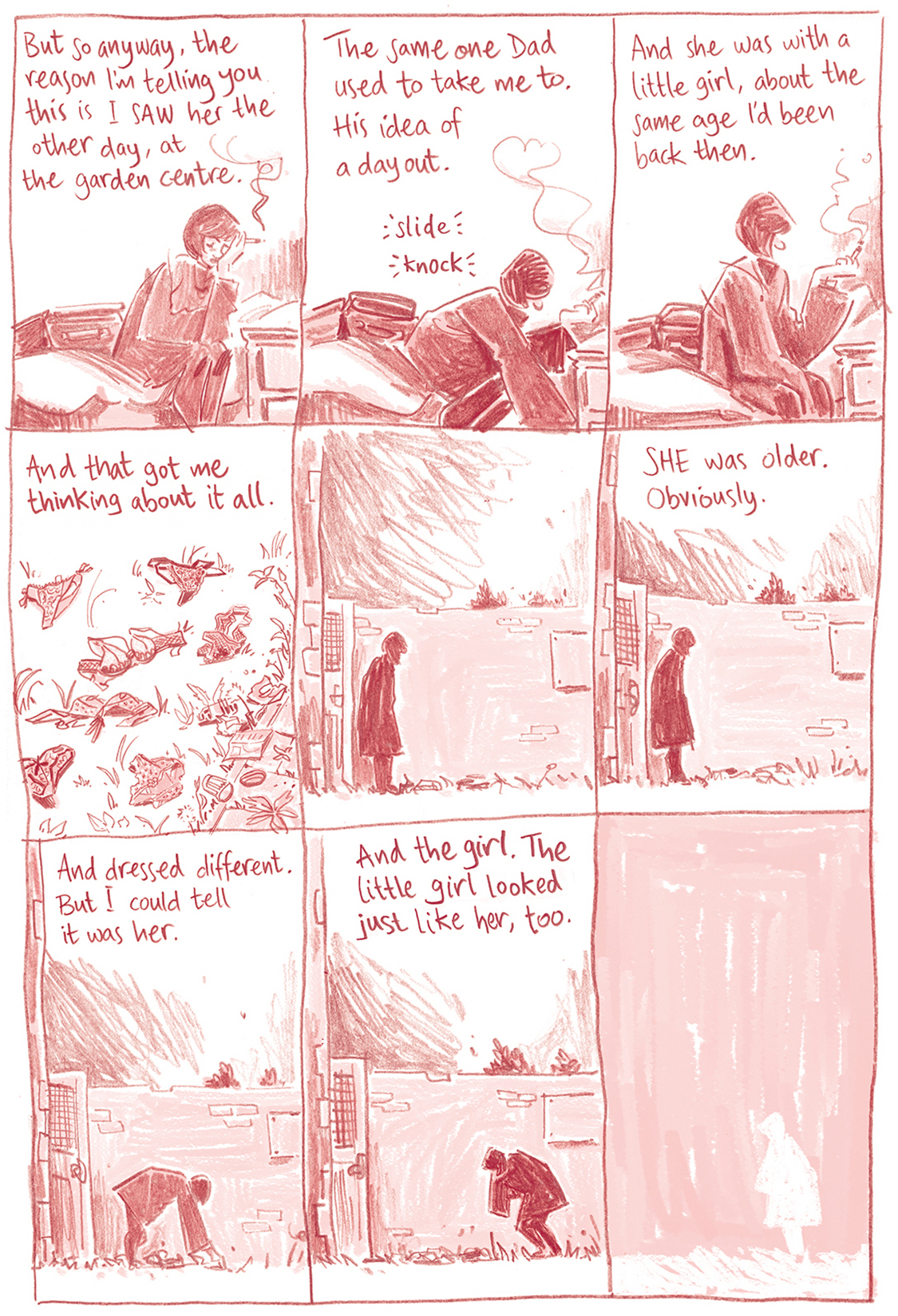
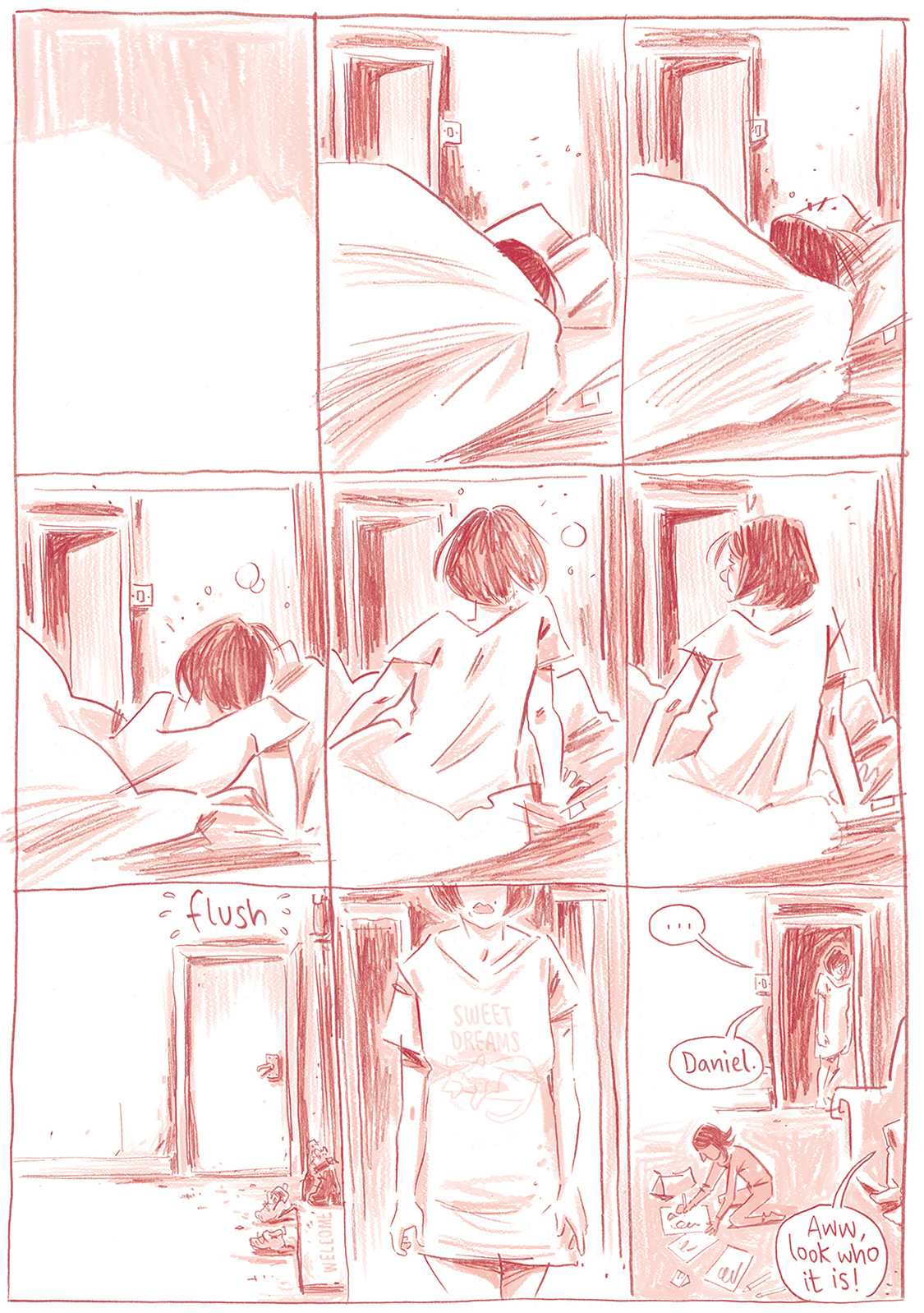
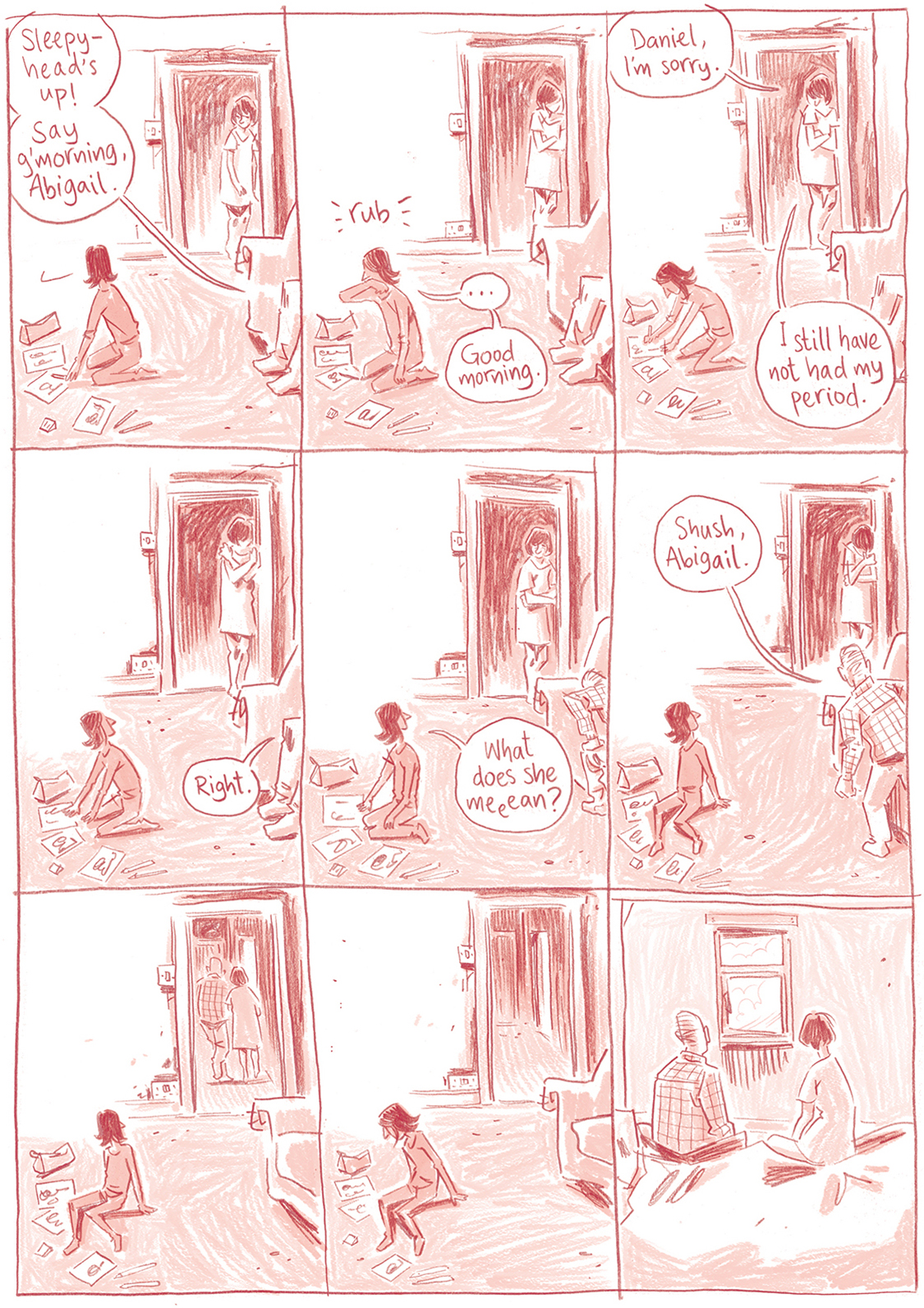

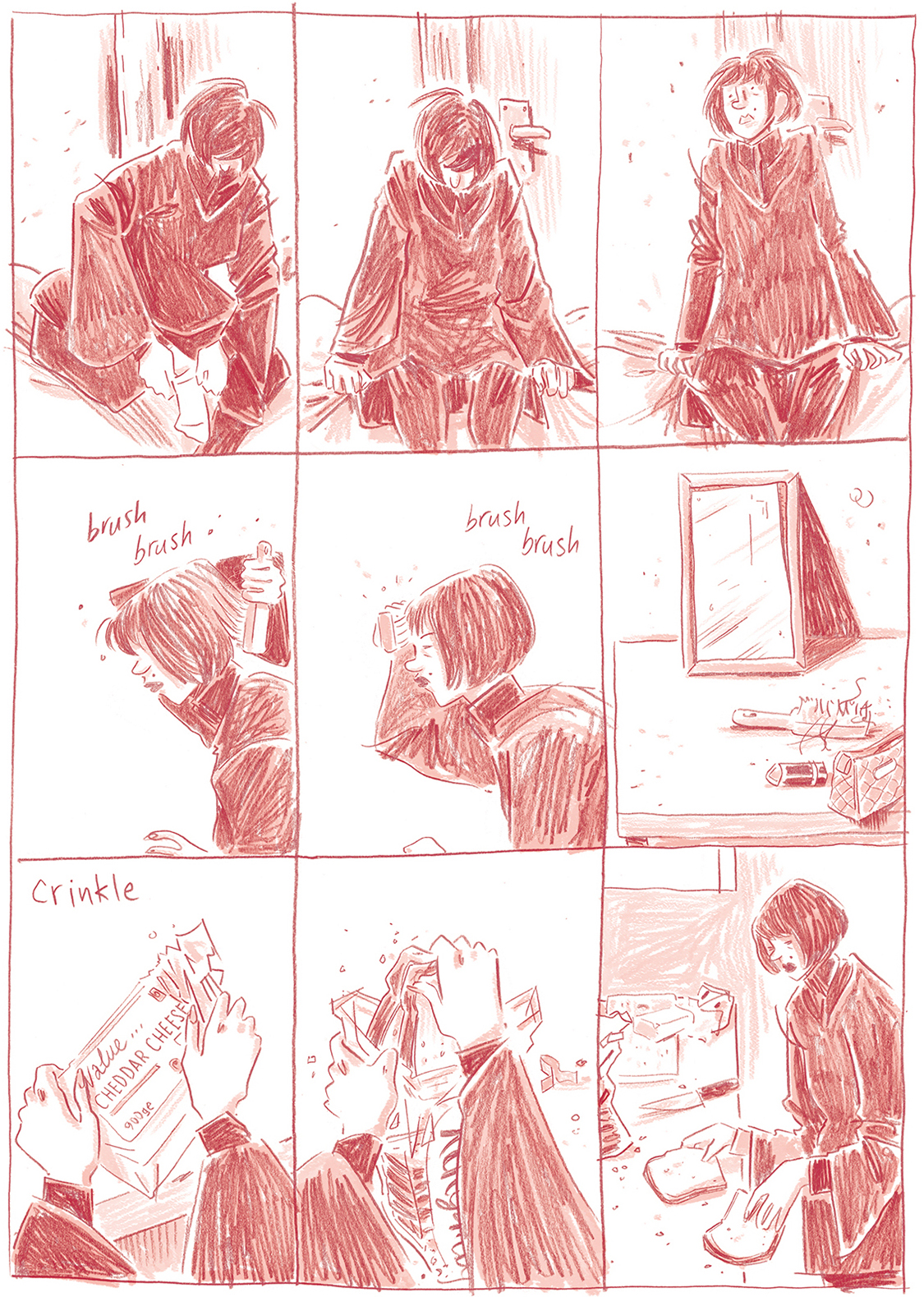
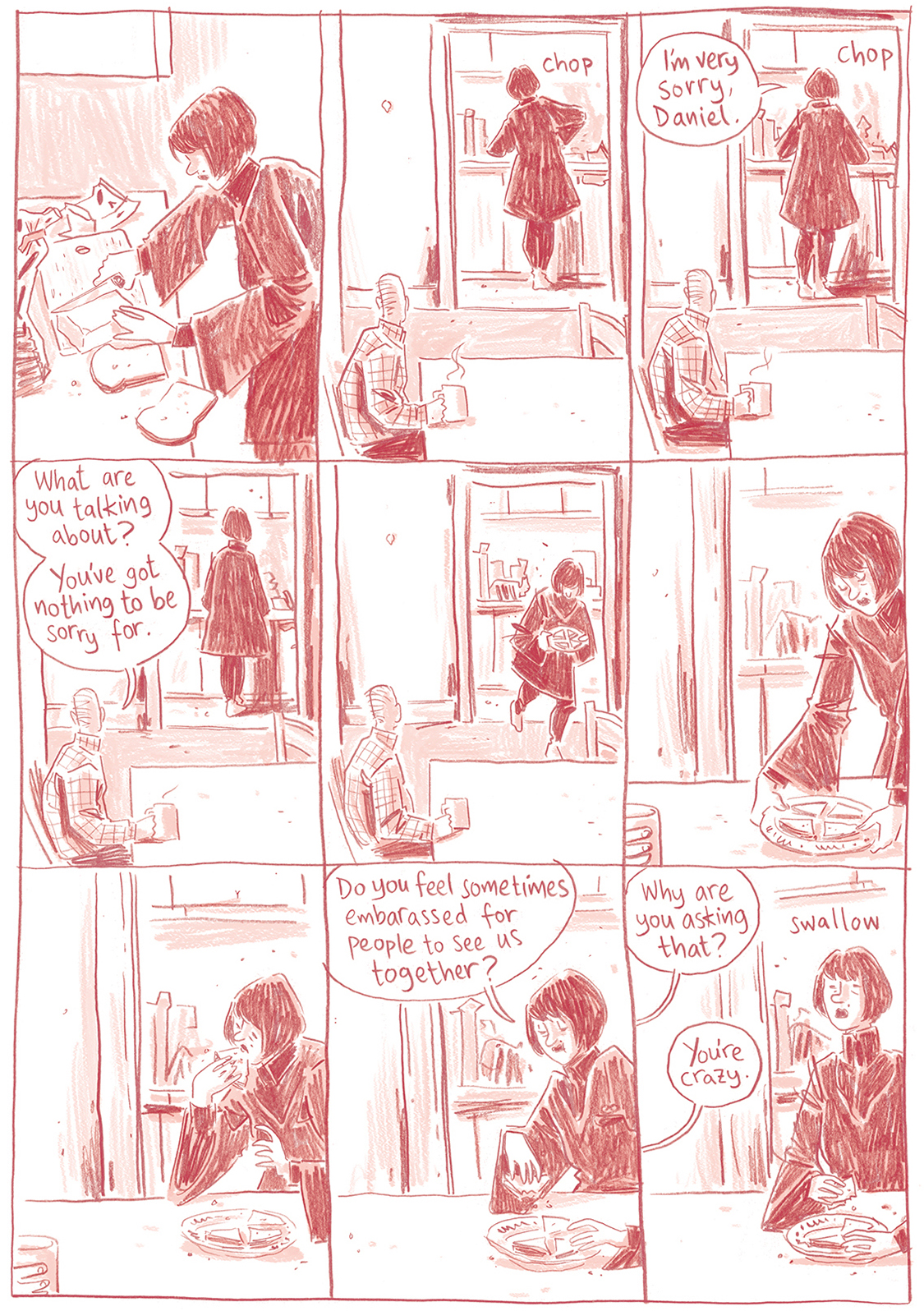
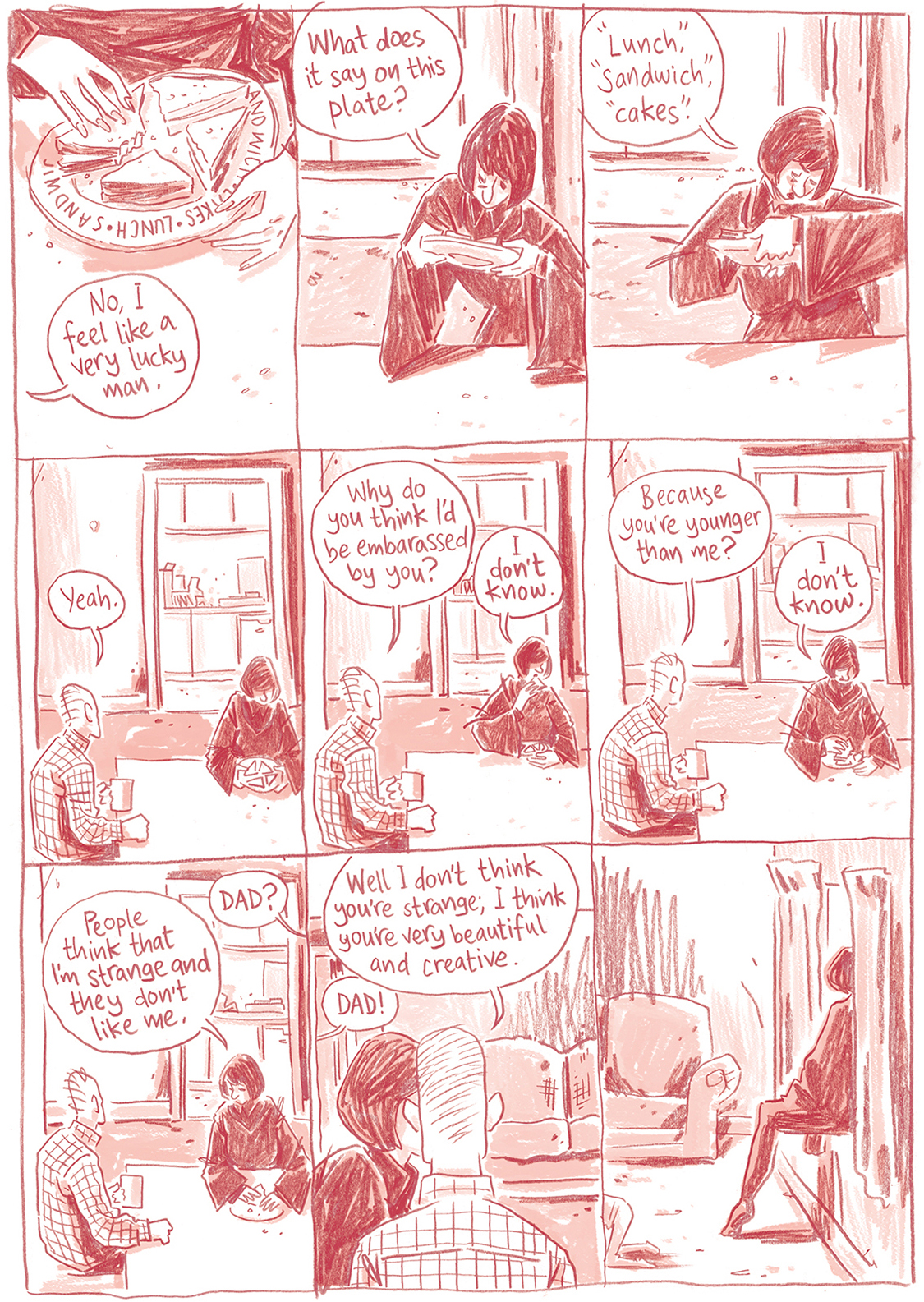

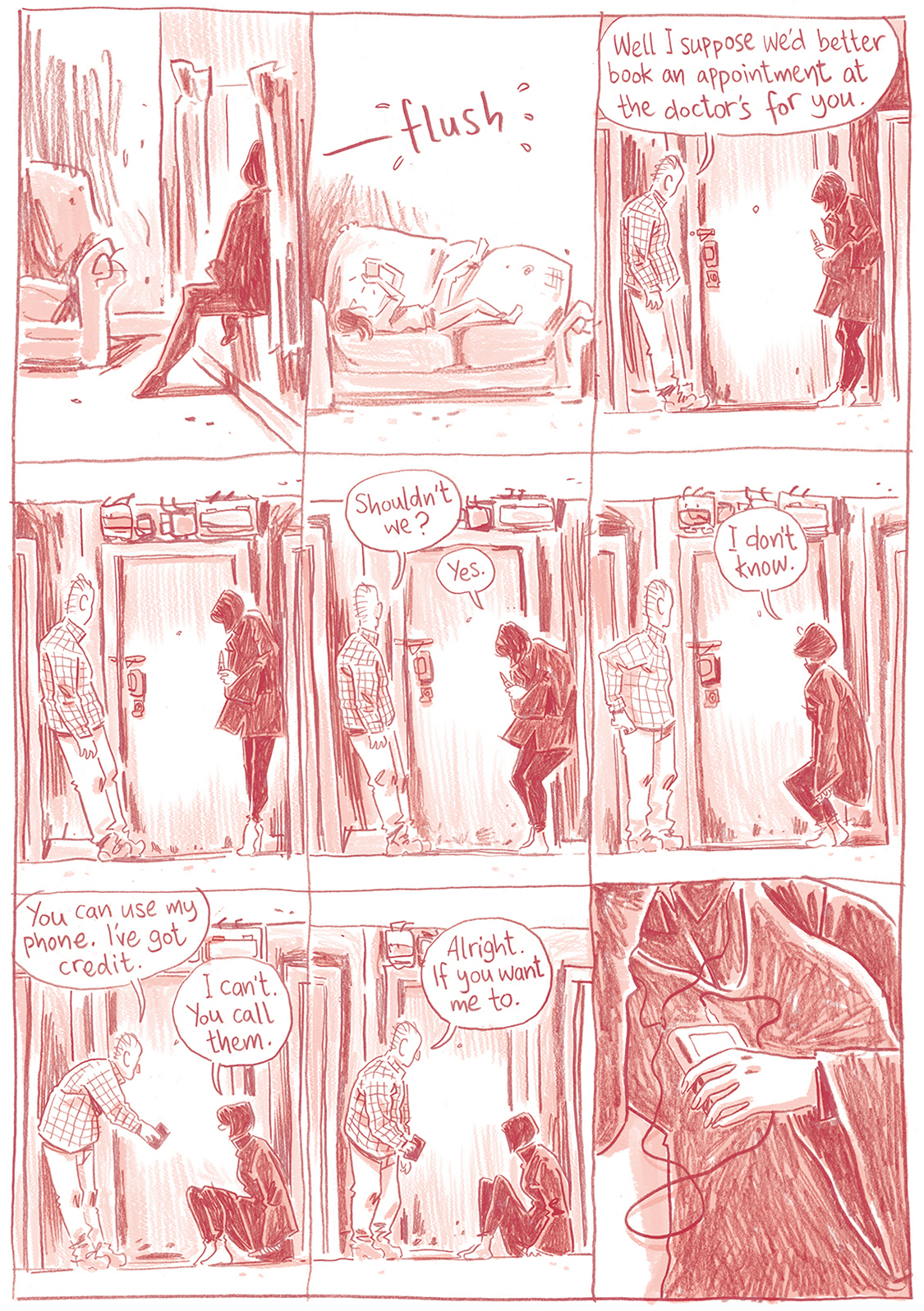

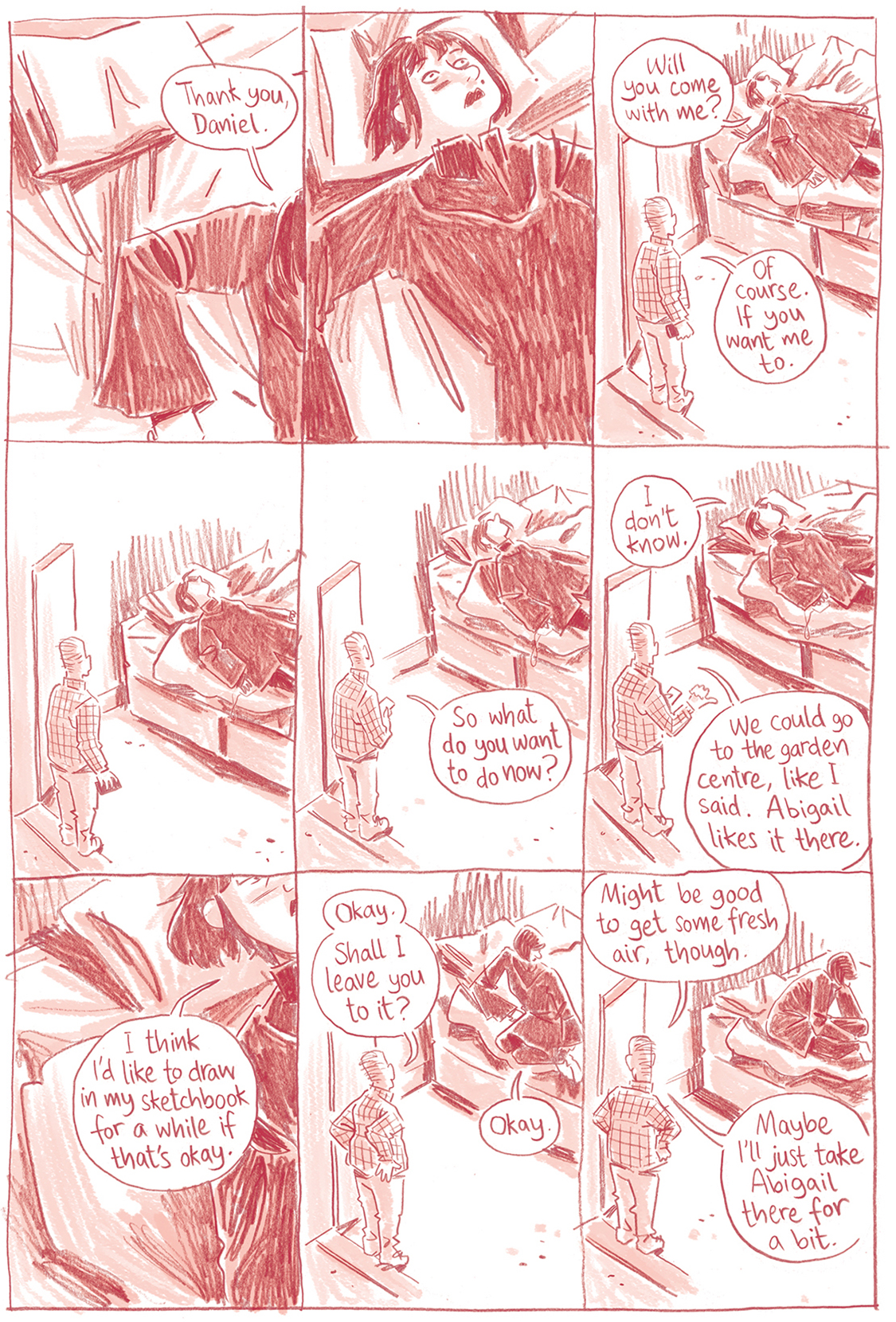
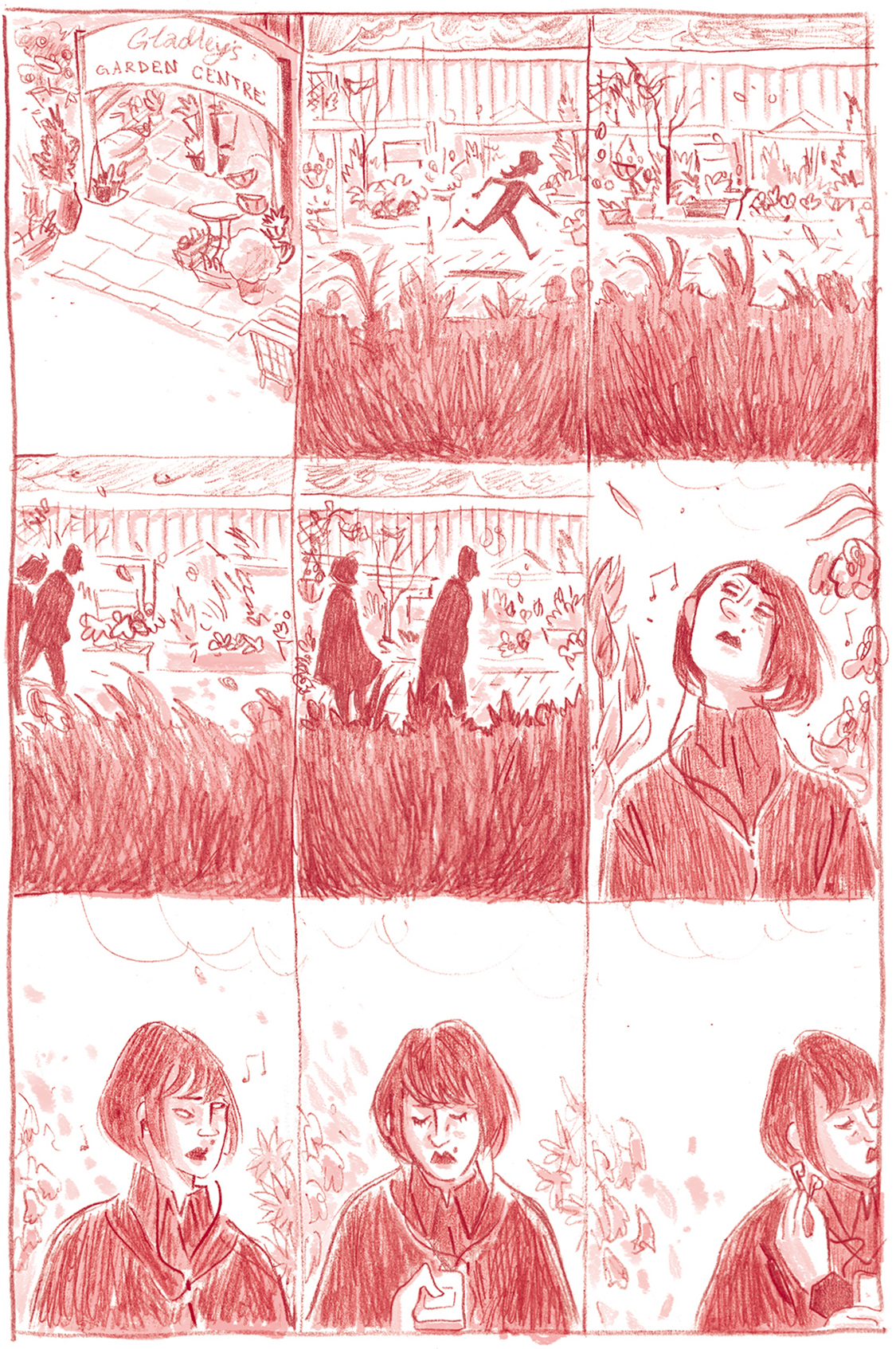
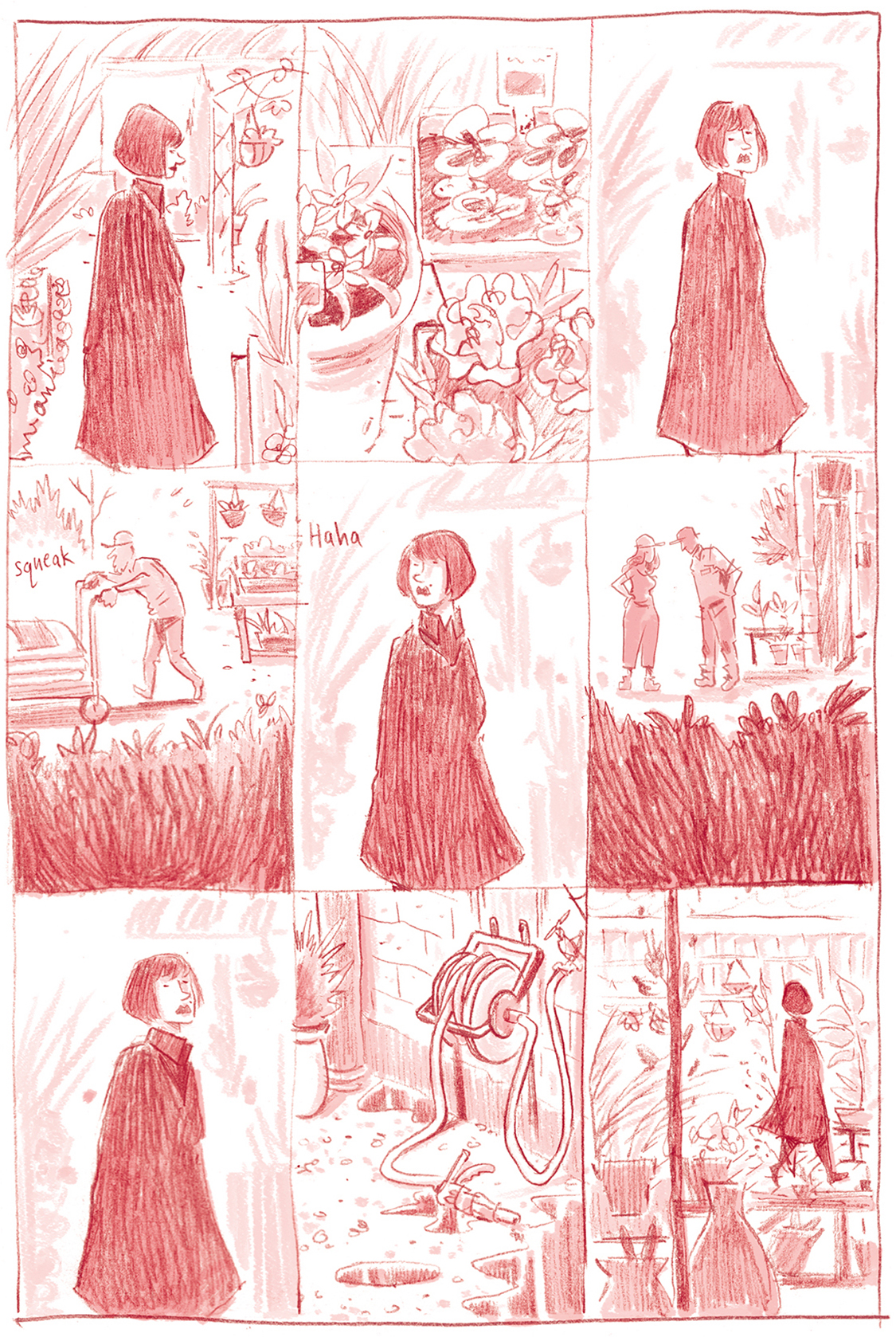
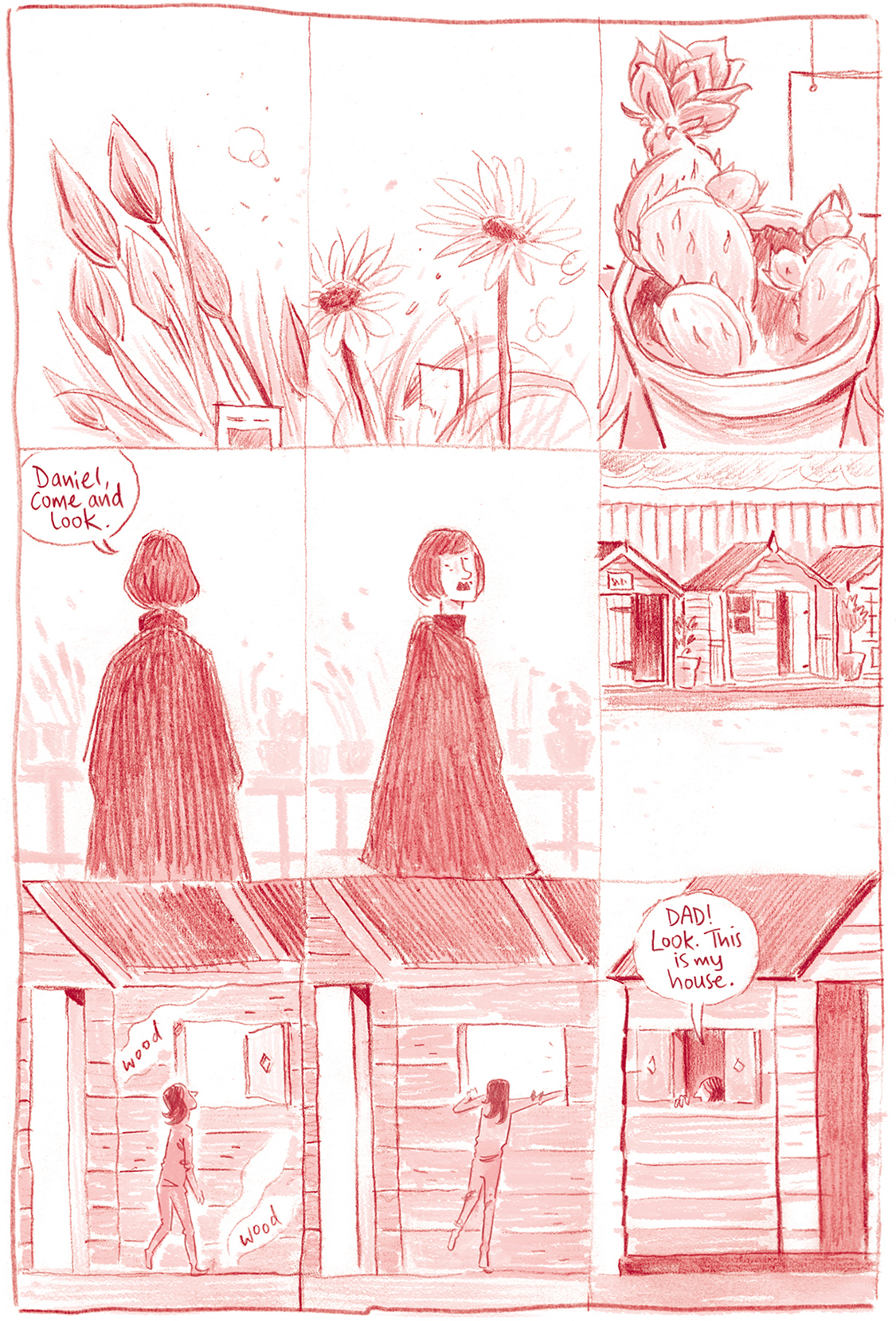
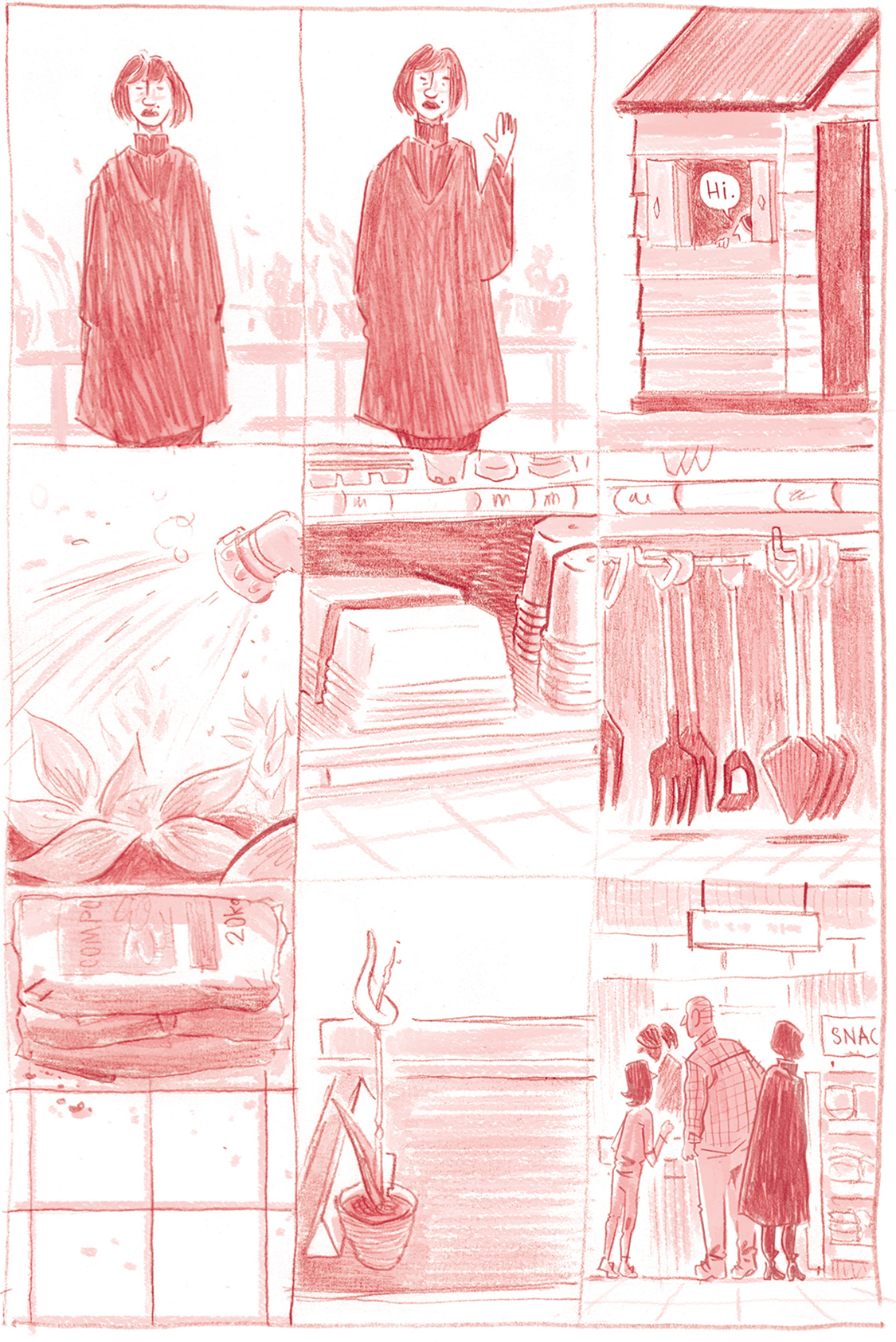
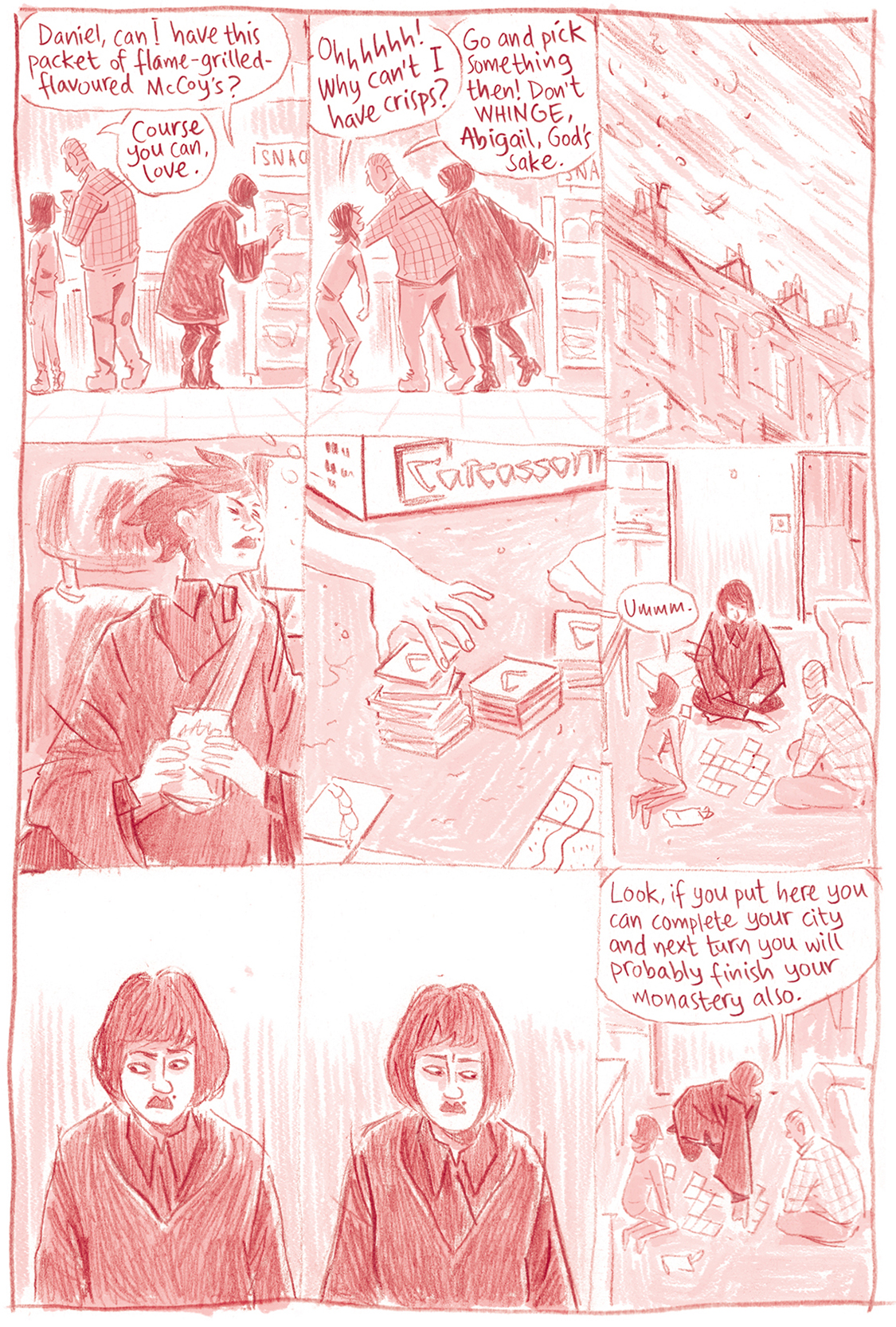
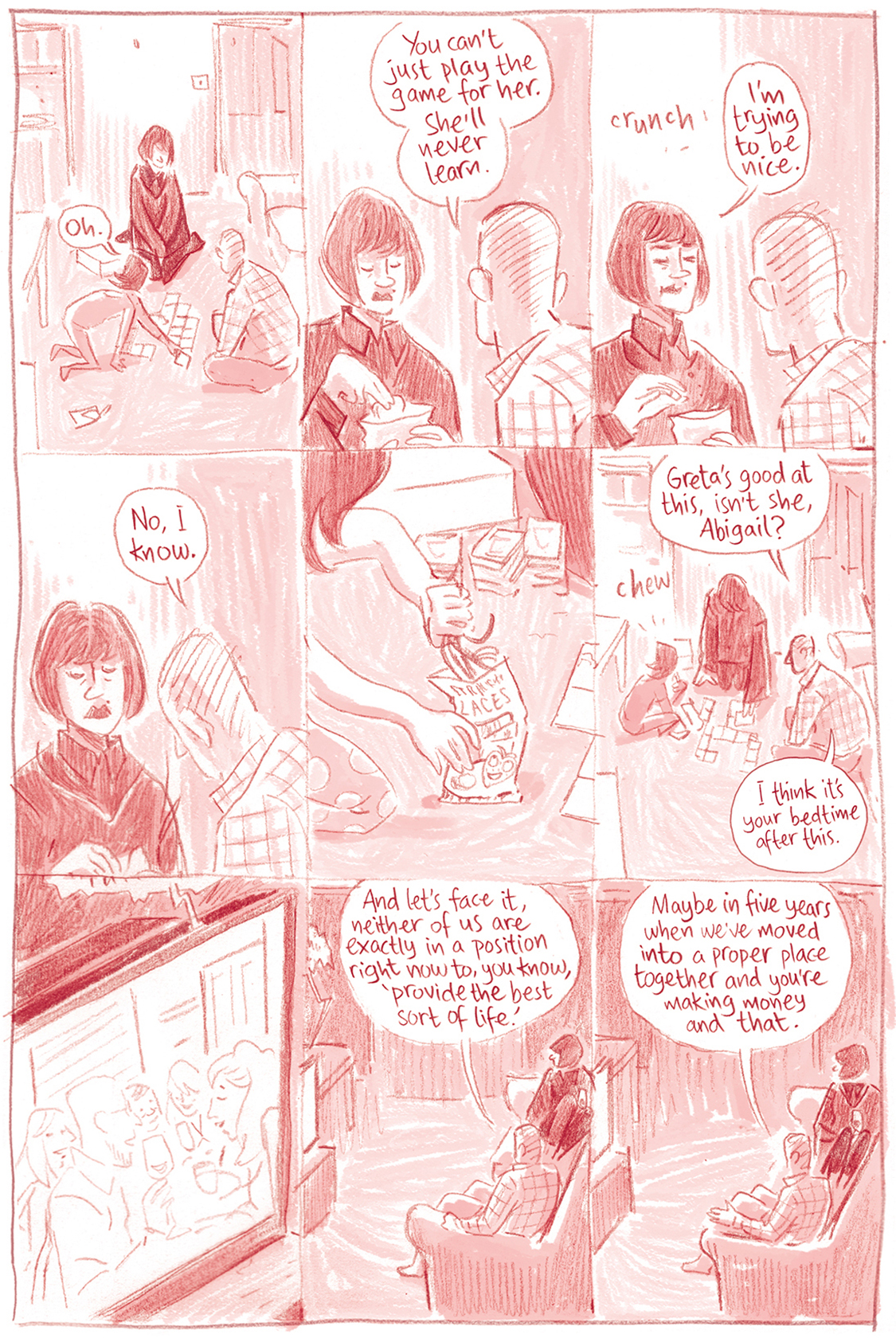

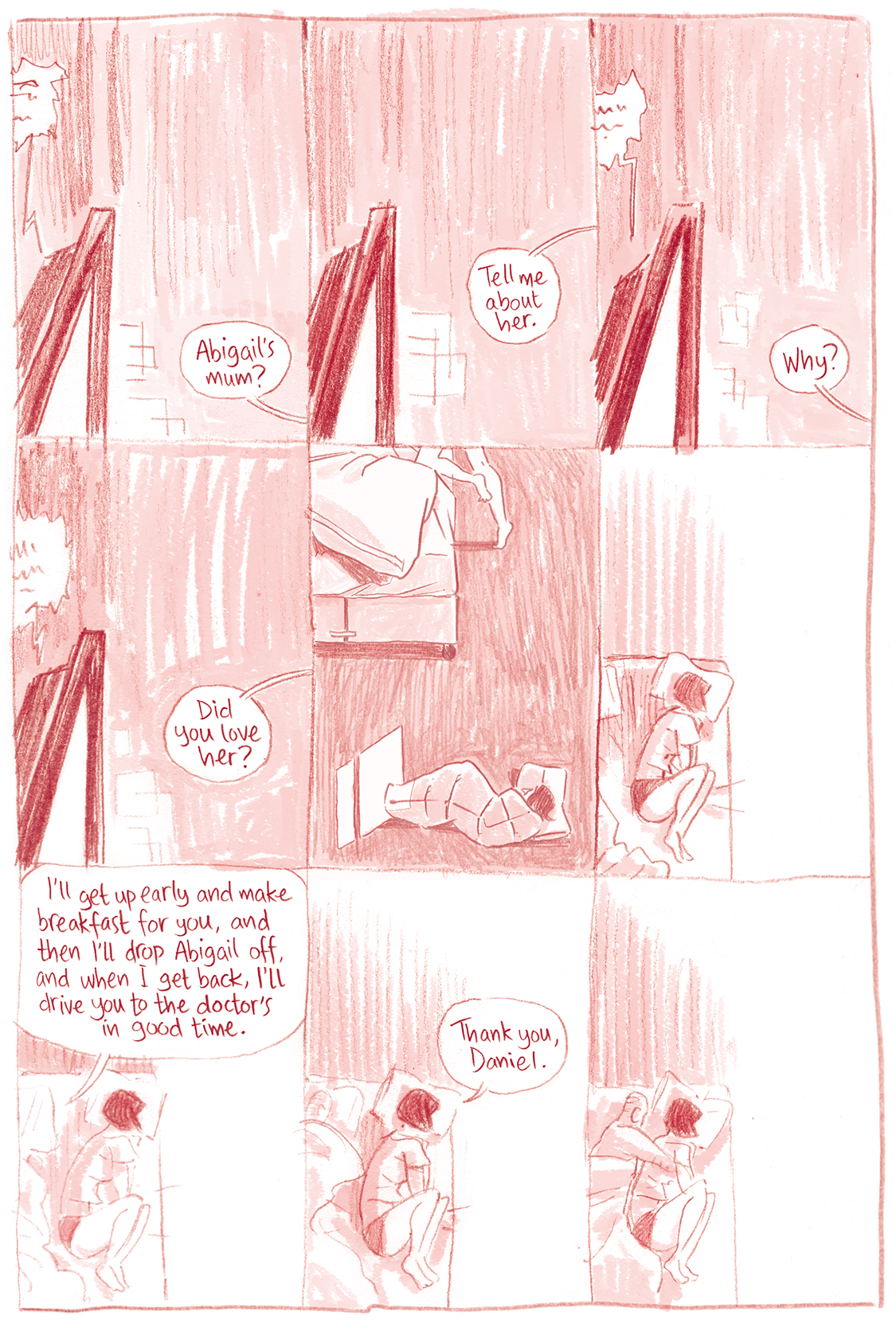
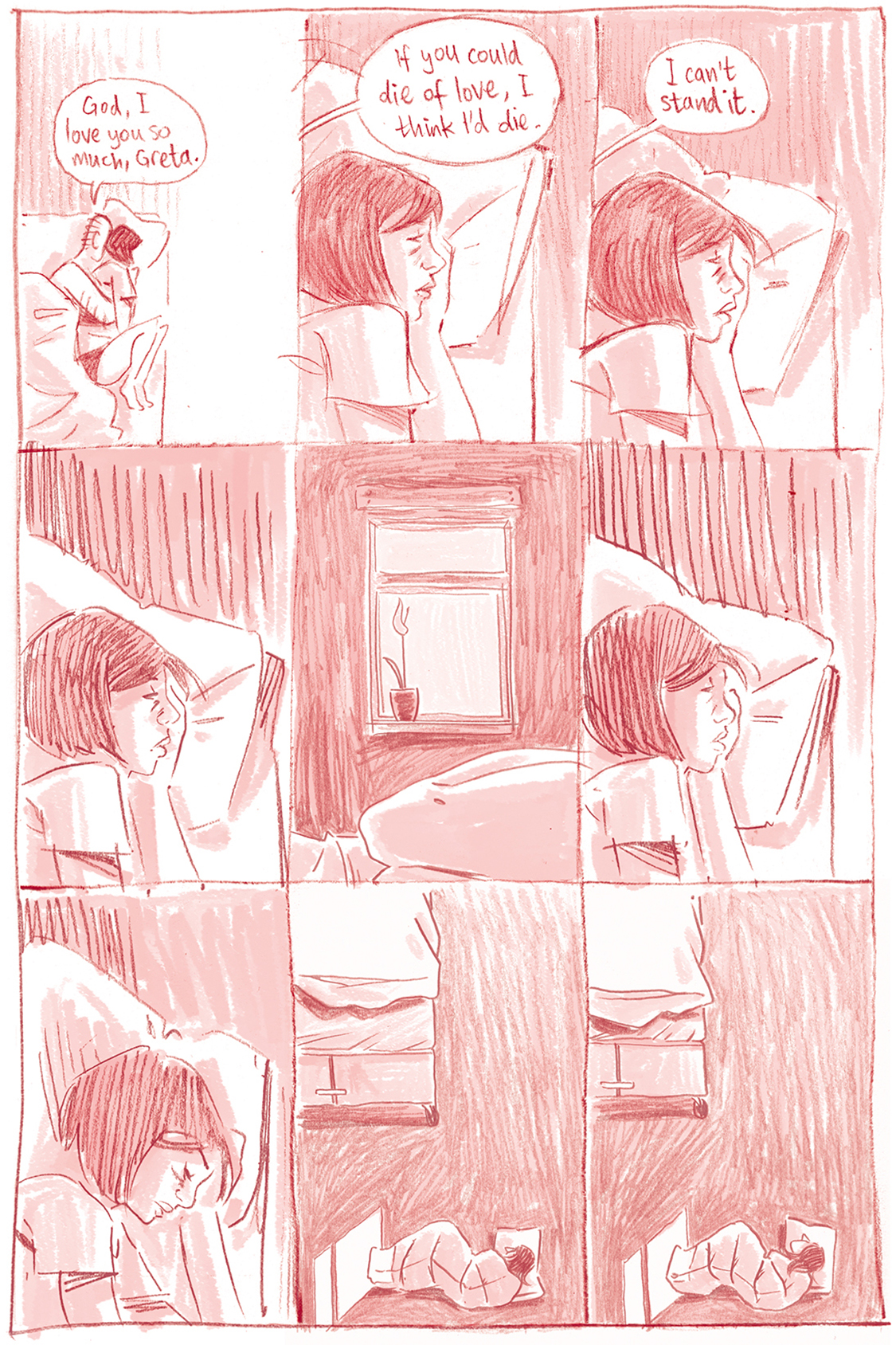
Filed under: comics, comics theory, graphic novels, my comics, writing | Tags: books, comics, fiction writing, graphic novels, writing, writing theory
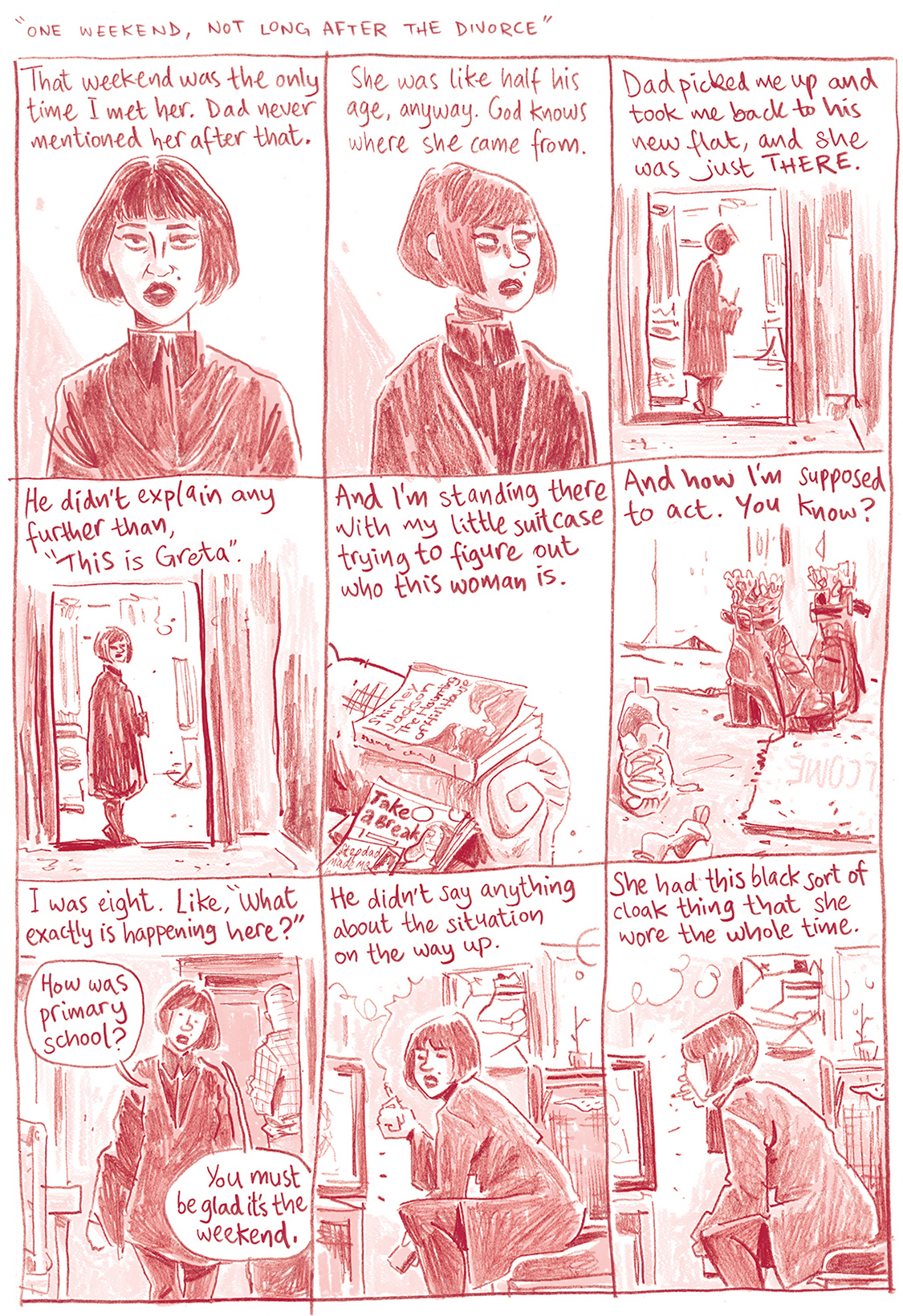
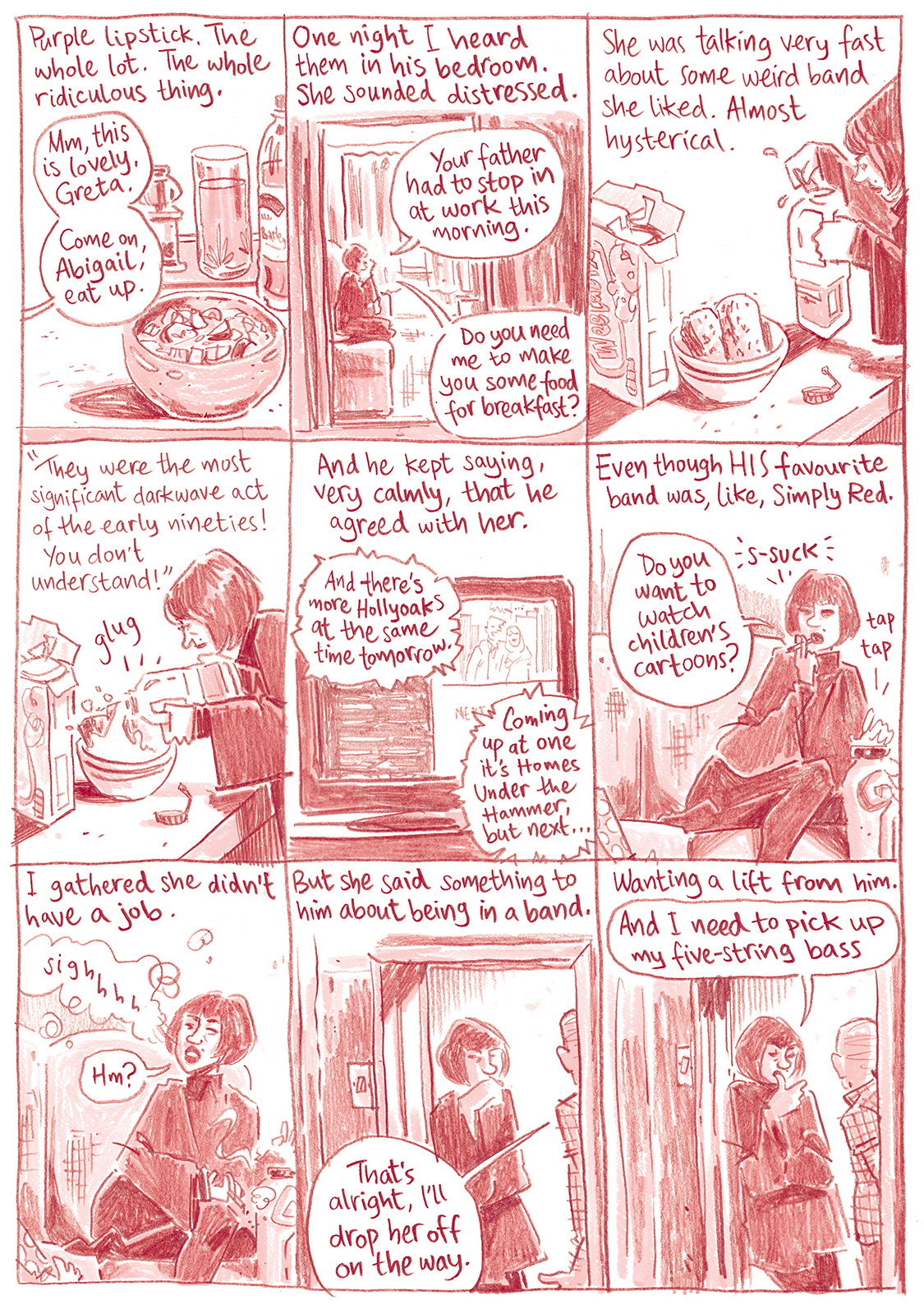
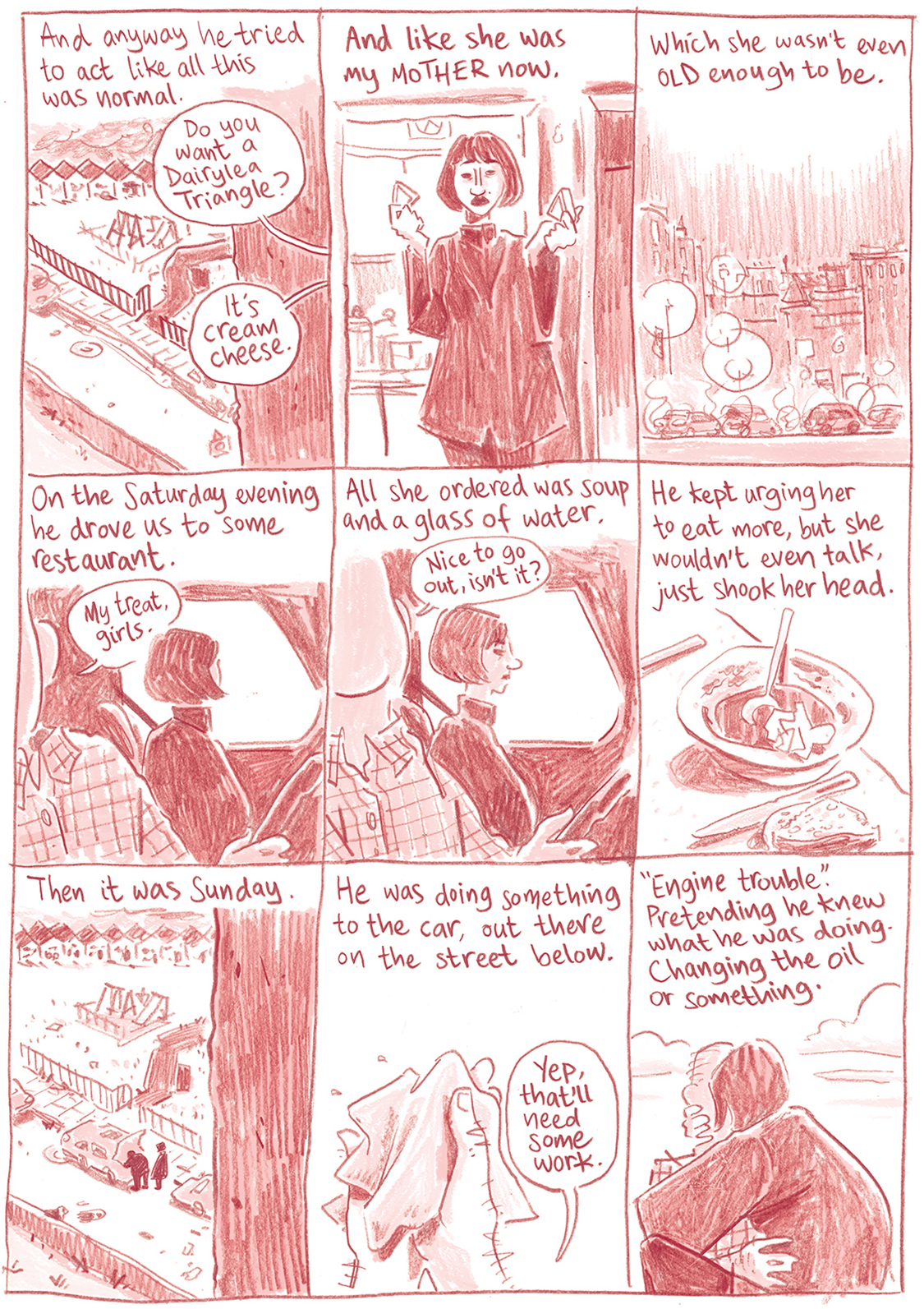
Sometimes your favourite bits of writing aren’t a good fit for the story…
When I’m writing a graphic novel and I find something that works, there’s this tendency to ‘over-write’. One small element of a story will suggest a side story or something in a character’s past, and when I sense that there’s something there, I’m almost obligated to follow it.
Writing fiction is a weird process.
Doing it at all seems to require entering a sustained state of lateral thinking. Finding something that really works, that takes on a life of its own and gets up and starts walking around, feels so miraculous when it occurs that you sort of have to let it do its thing and see what happens. What can happen is you end up with stuff in a story that does something effective in its own right, but doesn’t actually benefit the story as a whole.
A result of these tangents is that you can end up with a large project that appears complete but still doesn’t feel fit for sharing. At least three times now, I’ve experienced the immense relief of cutting a big chunk of material out of a larger work, and realising that it never really belonged there, that it was getting in the way of the real story.
The stories I love the most are very simple, but suggest deeper things going on just before, just after, just off-camera, just under the surface. Explicitly expanding a story too much robs it of mystery or space for the reader’s mind to work in. You have to cut the part to save the whole.
Cutting something out of a story can be agonising.
When you’ve found something good, you’re desperate to hang on to it, even when doing so doesn’t make sense. You can’t discard something that you like this much, you think, and you rationalise keeping it in by convincing yourself that it makes the larger work ‘eclectic’ in some vaguely-defined way. Some writers can do ‘eclectic’ and make it work to brilliant effect, but don’t you just hate it when you’re enjoying a book, and a new chapter starts, and the viewpoint changes, and suddenly it’s about something else? ‘Hey,’ you think, ‘I was enjoying that.’
So to convince myself to remove these parts that I like but which weigh down the larger work, I have to ‘save’ them in some way, to gain some kind of closure and move on from a story that’s still living in my head. They have to expand into their own full story, or stand alone as a short story, to in some way find a final form. Maybe by itself it doesn’t necessarily have a firm ending. Maybe, in the same way you’re trying to acheive for the main work, an excised sub-story like this can sit as a fragment, suggestive of something bigger.
Filed under: illustrations | Tags: books, children's books, graphic novels, illustration, travel

Is it really beach time?
Currently working with some talented people on a travelogue like no other.
Comics and diagrams, fantasy and reality, maps and diaries, history and the modern day, illustrations and photographs. This book is bringing together so many of the cool things you can do when images and text get together.
So often we use categories like ‘picture book’, ‘graphic novel’, ‘illustrated novel’, book formats with their own specific rules and design principles: a set of things that are allowed. But recently, we’re starting to see more and more crossover between those different formats. If the only rule is, “It’s images, and it’s text, on a page,” the possibilities might be limitless.
Can’t wait to share more :)
 Corban Wilkin