Filed under: comics, events, graphic novels, writing | Tags: art, books, cartoons, comics, drawing, graphic novels, illustration, writing
Filed under: comics, drawing, graphic novels, writing | Tags: art, awards, book-review, books, comics, fiction, graphic novels, illustration, news, writing
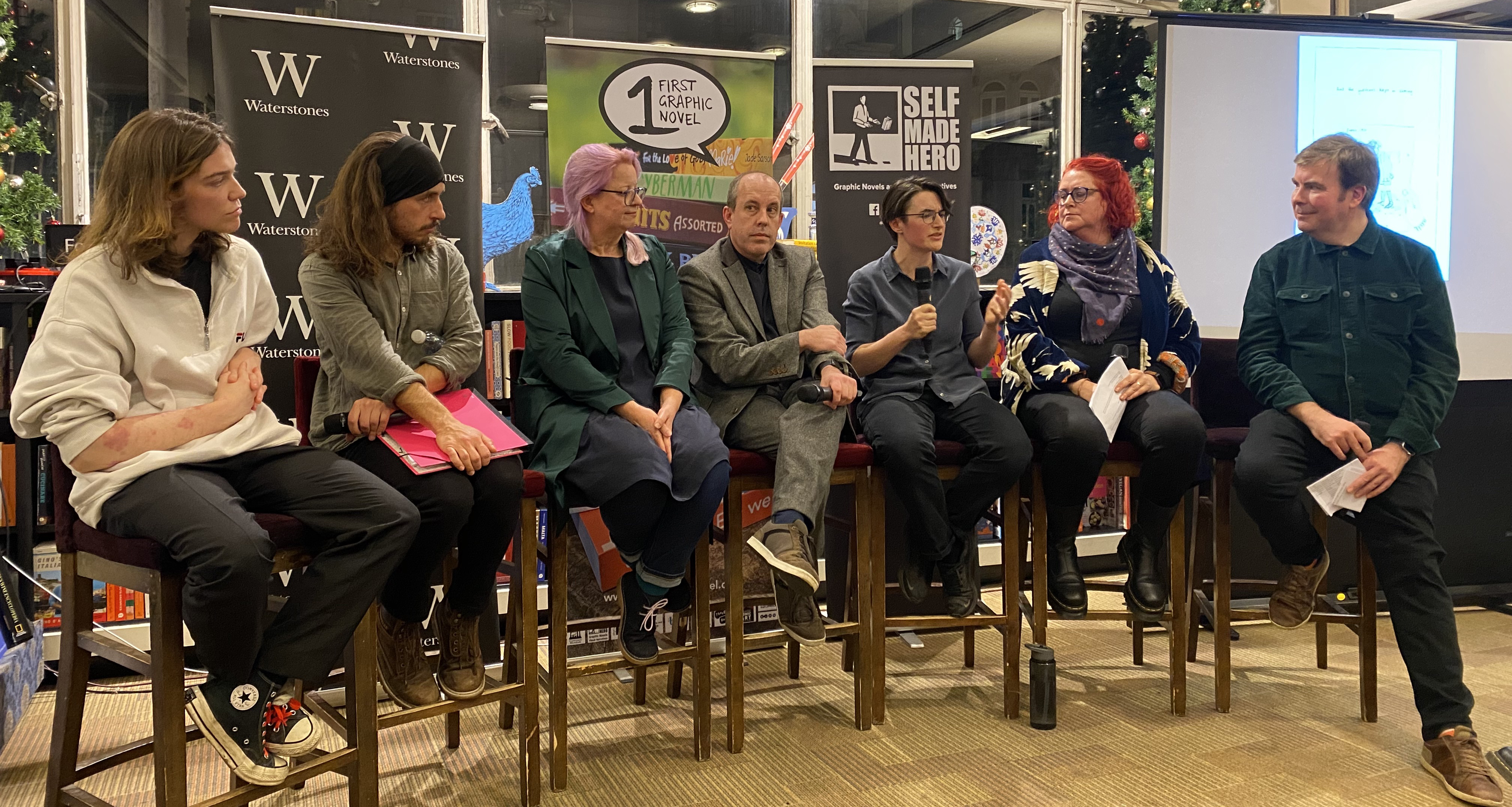
On Monday I had the immense honour of being invited to Waterstones Piccadilly to speak alongside the six other shortlisters for the First Graphic Novel Award on a panel hosted by the inimitable Alex Fitch of Panel Borders, who asked us some pretty challenging and revealing questions about our shortlisted graphic novels.
The insights my fellow shortlisters gave about their books showed how deeply and carefully they have thought about their work and proved once again the wealth of talented, intelligent people who are putting immense amounts of their own time and effort into this complex artform.
After the creators spoke, the seven judges for the award spoke each in turn about one entrant’s work. My entry, The Infinite Benefits of Shame, was addressed with the most incredible care and detail by Ayoola Solarin, for whose words of understanding I am more grateful than I could have imagined.
The award was given to Bone Broth, by the amazingly talented Alex Taylor (azbtart), with whose precocious artistic skill I’ve no doubt will produce a finished book more than worthy of this award. However, I think I speak for all of us when I say that as the seven shortlisters, we were just very lucky to be up there out of 170 entrants to the award.
As I grow older, and especially after hearing the kind and thoughtful words of the judges and other entrants, I’m realising more and more that the point of all this is not selling a book or winning an award: the point is to communicate. I’ve written recently in this journal about how I’m not always as good at meeting and getting to know people as much as I wish I could be. The only reason I write and draw is out of a kind of yearning to communicate, to articulate something that I am trying to understand about myself. I’ve always hoped that by finding a way to share this stuff, there would be people who would be able to read it and feel understood.
All my most profound experiences of art have involved the feeling of being totally understood by the author or artist whose work I’m experiencing. To see articulated by total strangers, in words or images, your own deepest feelings, things which you have not even understood yourself, is the pure magic of art. Our favourite artists seem to understand us more than the people we see every day. And to know that artists sacrifice everything to journey into their own underworld to find this understanding and offer it to the world is what drives me to continue trying my best to do the same.
Gaining a deeper insight into my own motivations for doing this, and experiencing the validation of being championed as one of the final seven, is a reward as great as any win, and I can only humbly thank you all one last time for the work of putting it together.

Thank you Corinne Pearlman, without whom the award would not exist; Emma Hayley, who has invited me along to many cool things over the years; Sabba Khan, who welcomed me so warmly to the event; Mark Wallinger: an unbelievable privilege to have him reading our work; Steve Marchant, who has already taught me and many others so much; Alex Fitch, for his world-class panel-hosting skills; and once again Ayoola Solarin for her support for my entry, which means everything.
Also thank you to James Spackman and the BKS agency, the ALCS, The Cartoon Museum, SelfMadeHero, BBC Radio 4’s Front Row, and to Waterstones for hosting the event! This is all so much more than I deserve and I can’t really express how grateful how I feel. And congratulations once more to the star of the event, Alex Taylor!
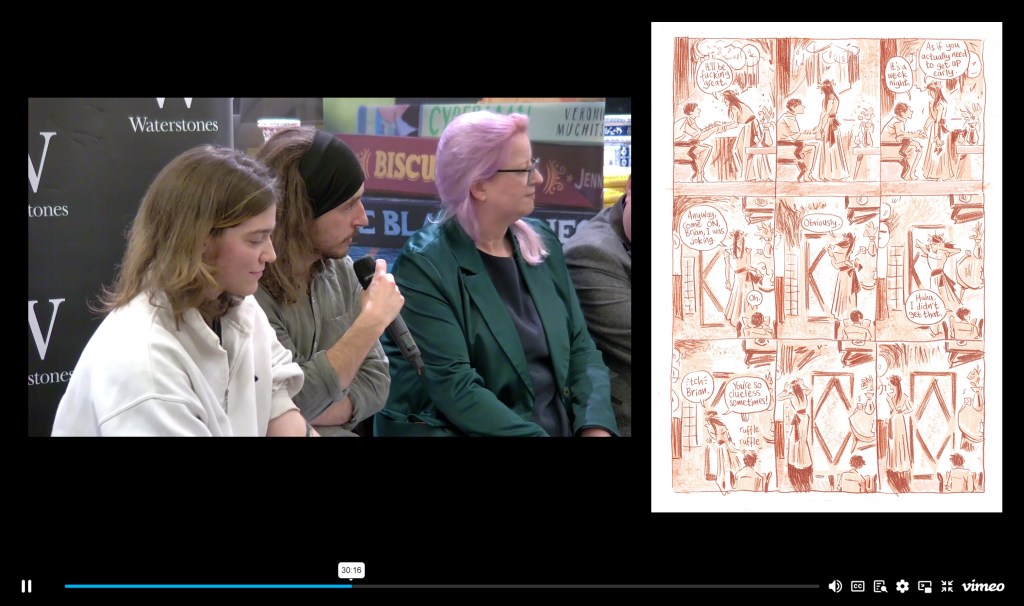
The event was a blur of nerves and excitement, but fortunately you can watch the whole thing on Vimeo.
Filed under: drawing, drawing theory, illustration, illustrations, sketchbook, writing | Tags: art, children's books, draw daily, drawing, illustration, sketch, sketchbook, sketchbook inspiration, sketching, south africa, travel diary, travel sketchbook, travelogue, watercolour
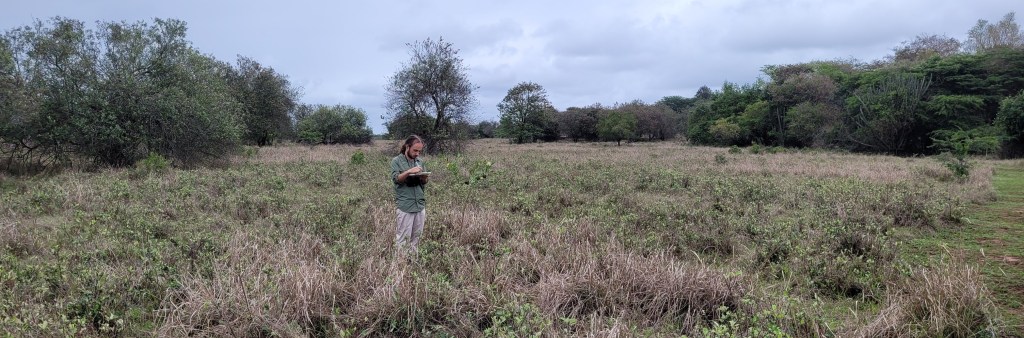
(Cross-post with Wild Tomorrow blog.)
In 2023 I was asked along on a volunteer trip for conservation with Wild Tomorrow. At the time, I hadn’t heard of Wild Tomorrow and I confess: I had no idea what I was signing up for.
I’m an illustrator and a bit of a writer, and was set to go to the wildlife reserves of KwaZulu-Natal in the east of South Africa for two weeks as part of CBCC (Children’s Books Creators for Conservation, founded just this year by Hayley and John Rocco), ostensibly with the aim of conducting visual research in sketchbooks for a potential book about the subject of wild animal conservation.
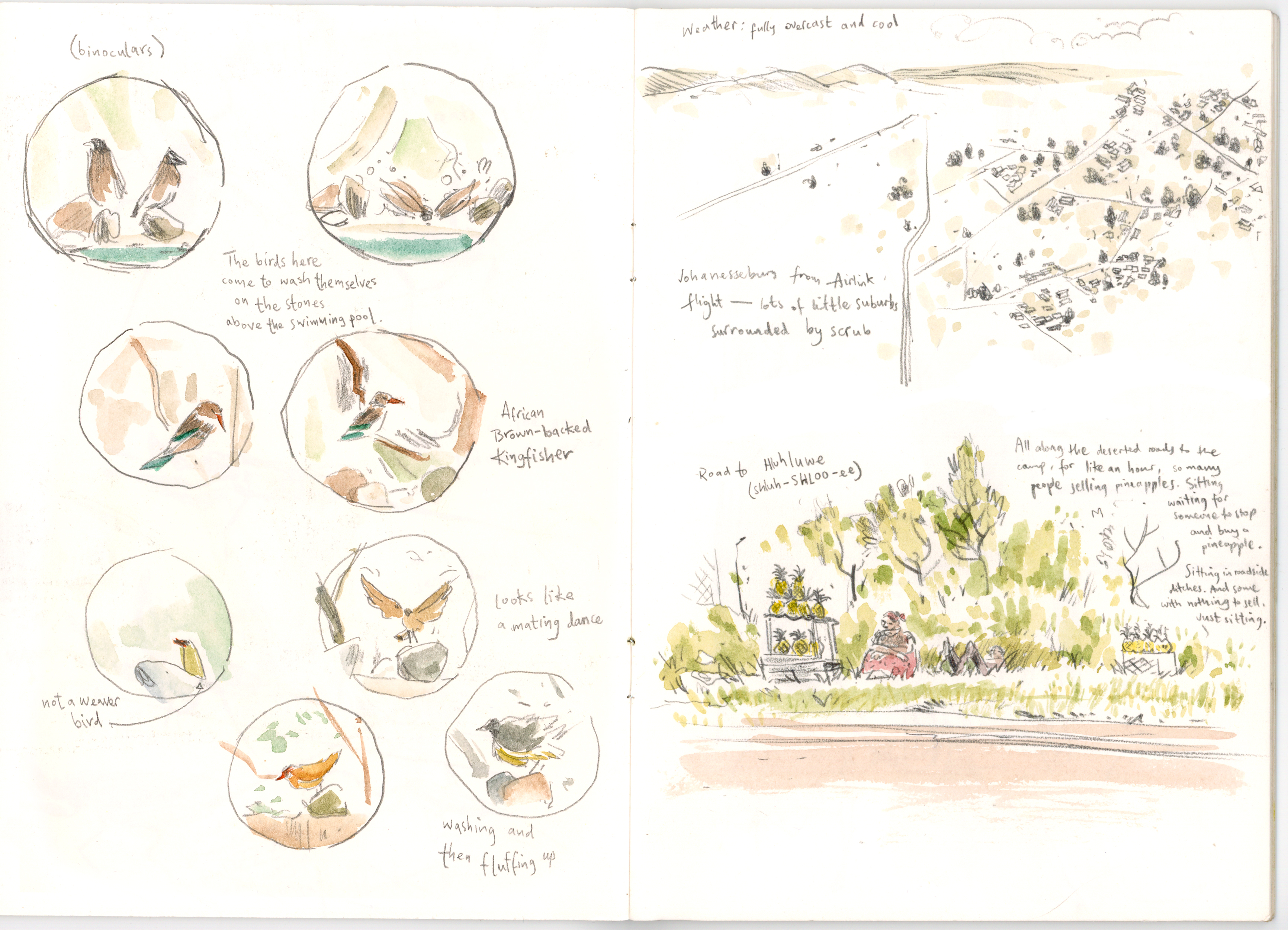
Being kind of travel-phobic I approached the trip with some uncertainty. What would these two weeks involve, really? I wasn’t sure. We were provided with an itinerary, which detailed the facts of the unbelievable things we would be doing each day, but these things seemed so far away: what did they really mean?
Sat behind a computer screen in drizzly England, it was hard to think of more than a tourist cliché of ‘go to place, see animals, be amazed.’ And I was worried that I might not be amazed enough, that my heart might not be able to go somewhere so big.

Before this year, I had never had any intention of going to South Africa or seeking out the famous animals of the country, and I’d certainly never been on a trip of this sort. So the opportunity came without preconceptions, and without any notion of what I could contribute, or what I could take from the experience.
This feeling continued even after touching down in Johannesburg and meeting all the lovely, enthused people I would be spending the next two weeks with. ‘Everyone else seems to know what they’re doing here,’ I thought to myself, ‘And I’m not sure that I do.’

But as the days went on, I found myself gradually overwhelmed by the strange new life that Tori and the Wild Tomorrow crew invited us into. In spite of my own hang-ups and misgivings, the country and its people began pulling me into their world, and by the second week, my mind and my heart had been blown wide open, and in time, I began to understand why I was there.
I wasn’t the only one. In conversations with others, I heard similar concerns: being unsure if coming on the trip was a constructive thing, and whether one had something to contribute to the group effort. I guess it’s more natural to have these doubts than I realised. But the doubts we had began to be overtaken by the undeniable optimism of what we were involved with.

Though I had begun the trip hidden behind my sketchbook, my immersion in the place became such that by the first weekend I neglected to draw for a couple of days, stunned and simply taking it all in and enjoying getting to know everyone.
But then, remembering the intended purpose of the trip, I returned to my drawing and note-taking with a renewed vision: that I could use the sketchbook to communicate my emotional and totally subjective experience of the beauty and importance of the threatened natural world, as well as the people working to protect it.

Compared to the tireless work of those who wake up every day and go out there on this mission, I do have to wonder what small part my abilities can contribute to the cause of conservation. But when I experienced the response people had to my drawings, I began to understand the importance of communicating experience, and that there can be something specially significant about a drawing or a very personal piece of writing.
I was even more fortunate to be travelling with fellow book creators as part of CBCC, and had the companionship of sketching alongside wonderful artists like Eric, Brian, and Jessica whose talent and experience and generosity of spirit were both humbling and an inspiration.
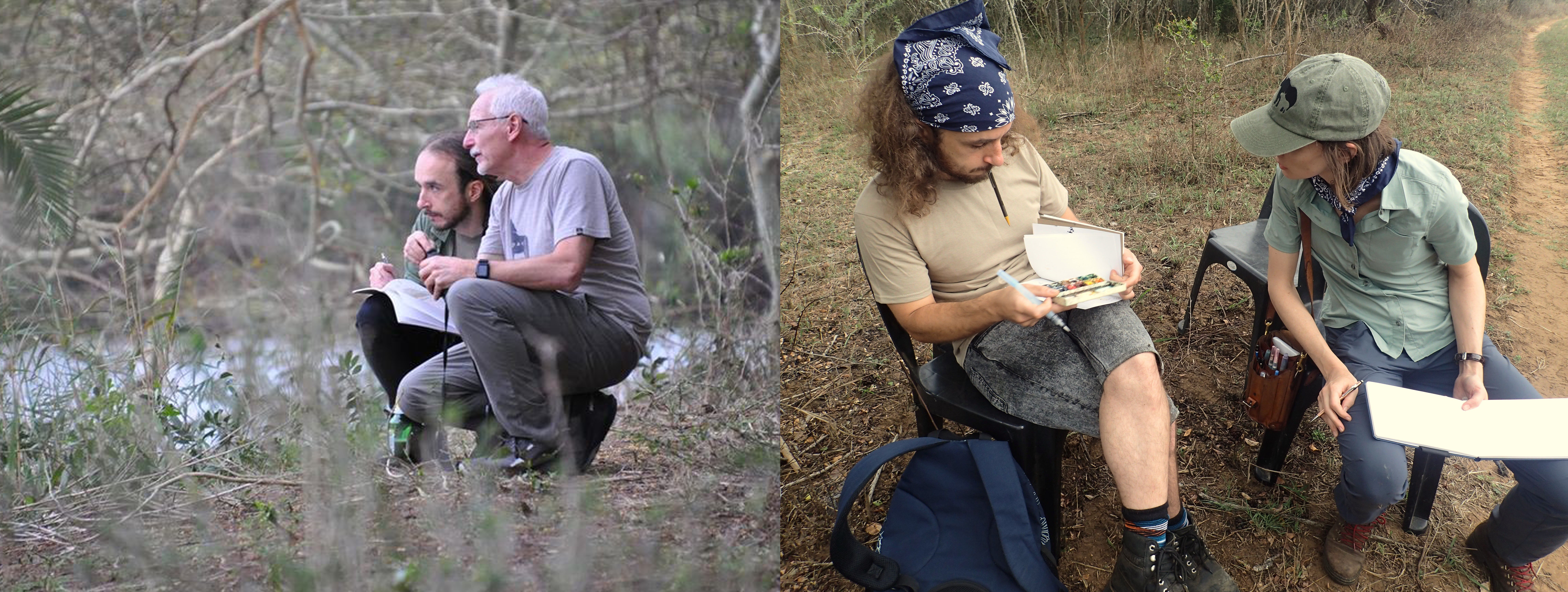
‘If I went in to this with a hamfisted idea of what conservation meant’, I thought, ‘Maybe other people have the same unclear or stereotypical vision of all this, and maybe I can share some of my dawning understanding with them.’
Can a drawing capture something that a photograph or a video can’t? Again and again people told me, yes, it can. Drawing opened up conversations with rangers, landowners, vets, locals, and fellow tourists from all over, and what wonderful conversations they were: driven by their love and awe for what was in front of us, a love and awe that they helped me to discover too.

I guess there’s a being there in drawing that people respond to. Someone asked me, ‘Why not take a photograph and draw it later?’ But that would only be drawing animals. And going into the experience, I had worried that drawing animals was all it would be.
But being there, and being a part of it, mattered. From people’s kind and open responses to what I was doing, I learned that by being there I could do much more than simply draw animals: I learned that I might be able to articulate something of how it feels to be there, in the trees where an elephant has fallen, to feel her heated breath, the pulse in her ears, the texture of her skin. And the mood, the tension, the atmosphere. And the determination and care of the people who do this work.
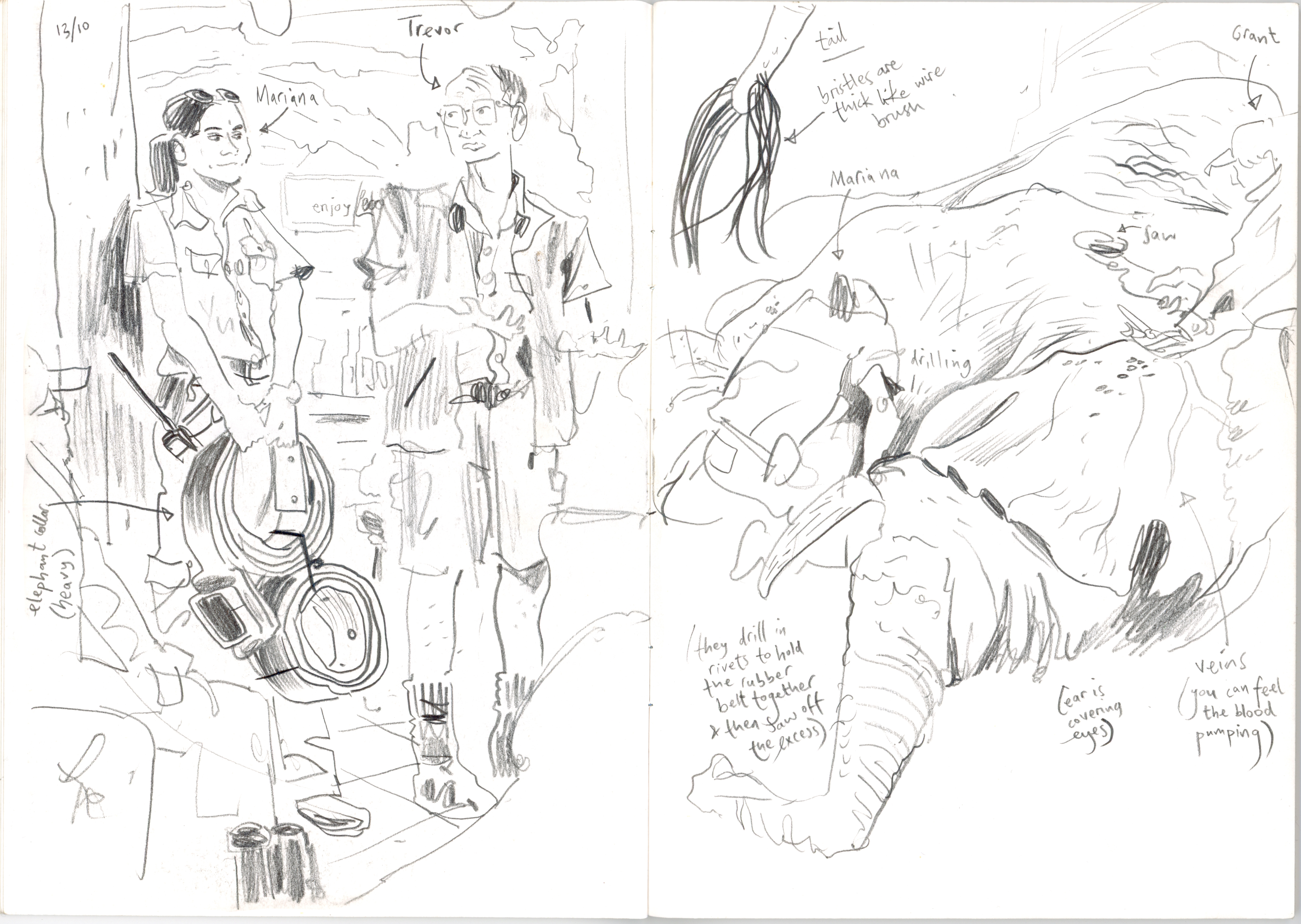
I see art as a way of communicating things that can’t be described in the ordinary ways. There are things we can feel and see that defy simple description, and we saw these things every day. I like to think that this is why poetry exists, to give us the means to articulate feelings that can’t be articulated.
I just hope that a little something of my appreciation for the dignity and vulnerability of these animals and these people, and these places, can come across in my drawings enough to inspire others to feel something of the understanding that dawned at these moments of intensity.
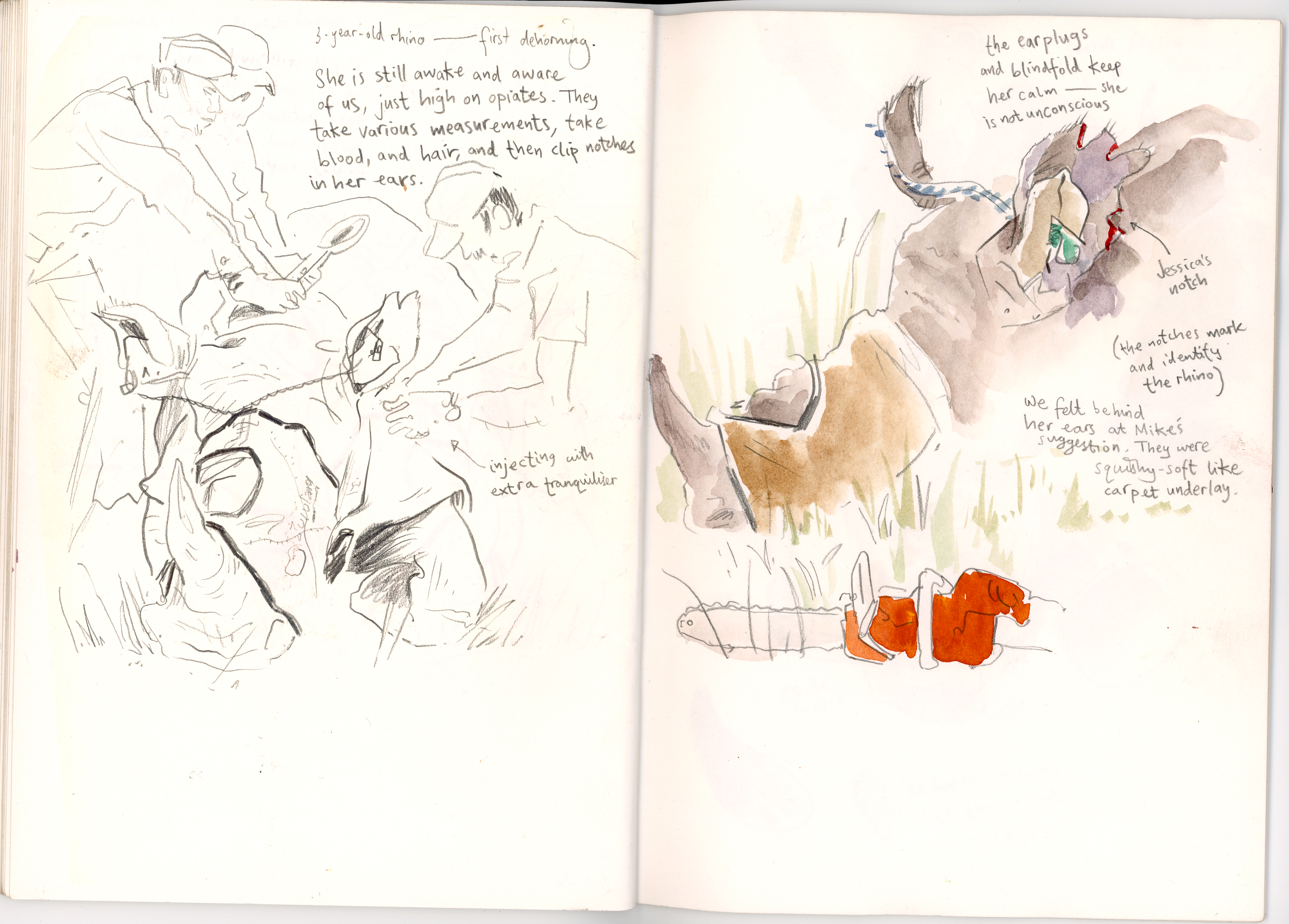
It would be tempting to tell everyone to go buy a ticket right now and hotfoot it to KwaZulu-Natal for two weeks with Wild Tomorrow (and if you’re an artist, a photographer, a poet, or simply a dreamer, then you should consider it if you can), but I also took away a broader message.
We go through many things in life, and each of us lives a different life. There are places you will go that I never will. You may live most of your life in a faraway city I yearn to visit but never will, with your own dreams and fears, ecstacies and heartbreak. We can each only live one life. But by keeping our eyes and our hearts open, and by making art in any way we can, I hope we can let each other in to our own subjective experiences, and see a little bit through each other’s eyes, and live a little bit of each other’s lives, and capture some essence of the fleeting moments in time that make us who we are, and finally understand one another.
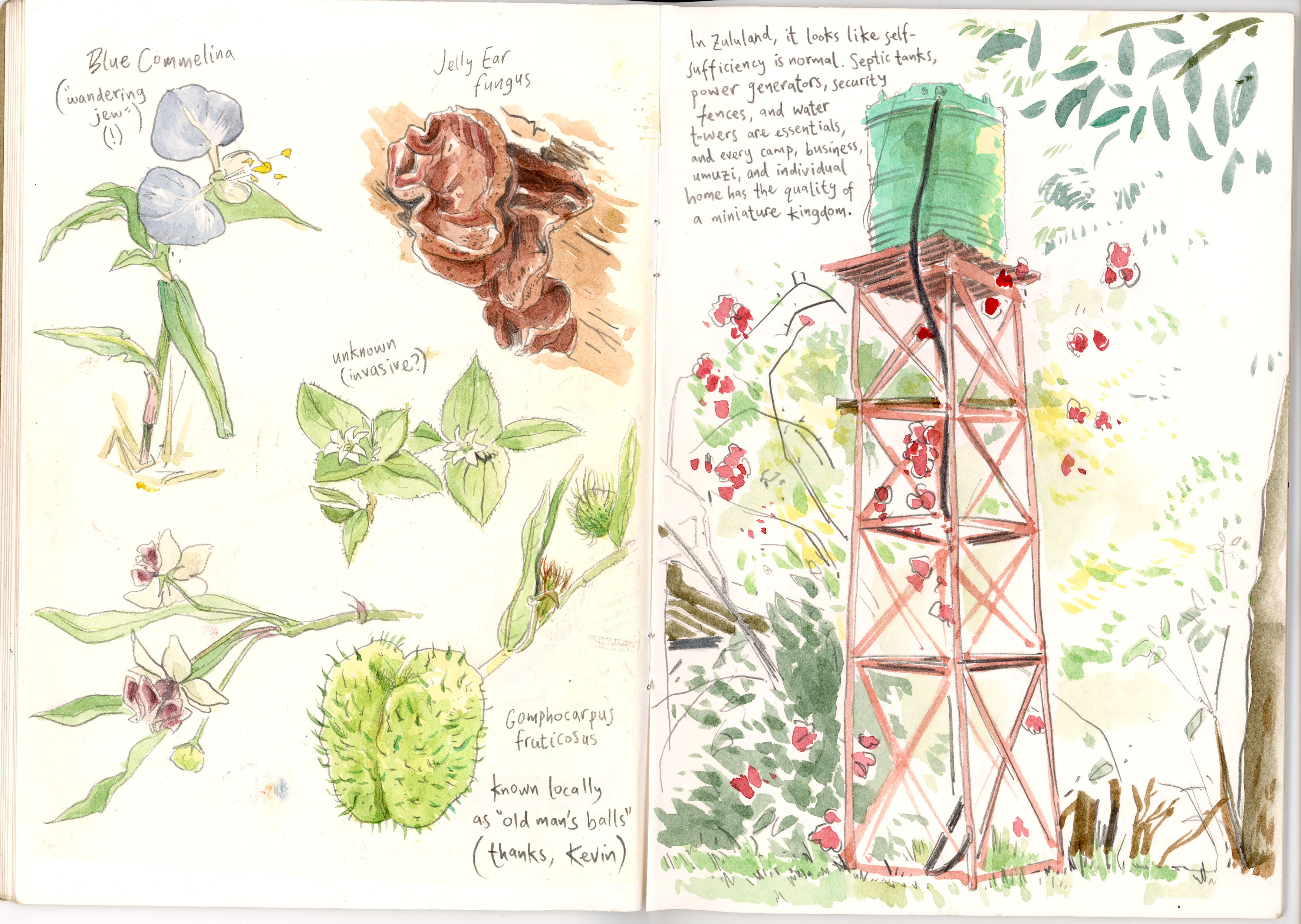
Although I went in as a clueless bystander, unconvinced that I had the spirit to rise to the experience, I found myself deeply moved by the things that the people at Wild Tomorrow worked tirelessly to make us a part of and by the glimpses that I had of the lives that go on there. My simple little sketchbook was merely a tool that helped to make this connection happen.
I still need to figure out how to develop all this into something that can contribute to Wild Tomorrow and the wider cause of public communication of conservation issues which is the mission of CBCC. But just going, and being there, was overpoweringly positive, and, I hope, the first step in something very good, and one of the most enriching and fortunate experiences of my life as an artist.
(Photos courtesy of Greg Neri and John Rocco.)
Filed under: comics, drawing, graphic novels, writing | Tags: adult comics, art, award, comics, drawing, first graphic novel award, graphic novel, graphic novels, line drawing, writing
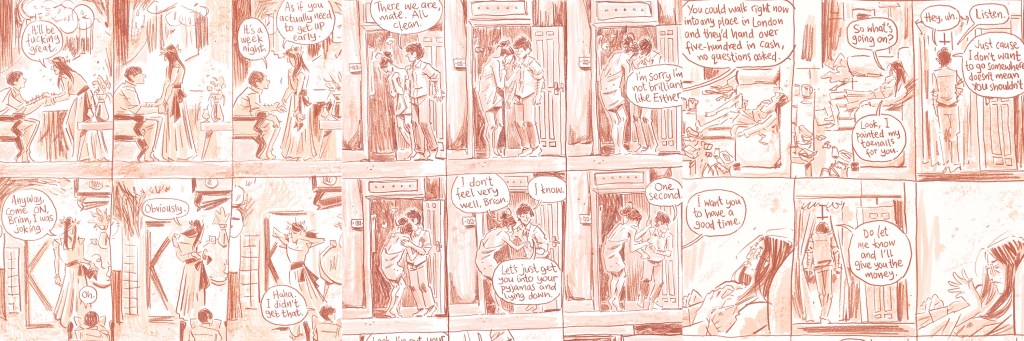
My comic The Infinite Benefits of Shame was shortlisted for the First Graphic Novel Award this weekend at Thought Bubble!
Congratulations to my fellow shortlisters:
Florrie by Anna Trench @anna_trench
The Hiraeth Club by Gareth Cowlin @garethcowlin
Mrs Thorwald by Cathy Brett @gingerdoodles
Zayani Zam by Mereida Fajardo @m.ereida
The Noisy Valley by Myfanwy Tristram @myfanwytristram
Bone Broth by Alexander Taylor @azbtart
Whoever wins, it’s an incredible recognition to have been chosen from among so many entrants and I’ve been humbled by the quality of the other entries.
All of you, who are making personal and deeply-felt work in this ludicrous artform, in this country, in these increasingly-difficult times: you are already winners in my eyes and I love you all for doing what you are doing.
Thanks to the lovely Khadija Osman @k_o_writing and Corinne Pearlman @corinnepearlman for putting together and attending the table (and for the rum)!
And thanks to Chloe Green @okaychloegreen, James Spackman @blackpooltower01 and Zara Slattery @zaraslattery for announcing the shortlist.
Thank you to the judges (and champions of comics): Steve Marchant (plus everyone at @thecartoonmuseum), Emma Hayley (plus everyone at @selfmadehero), Corinne Pearlman @corinnepearlman, comics critic Ayoola Solarin @immortanayo, graphic novelist Sabba Khan @sabbakhanart, artist Mark Wallinger @mark_wallinger_mark, and Alex Fitch at @panelborders for seeing potential in my work.
Plus thanks to @alcs_uk and James and everyone at @bksagency for all they have done to sponsor this award and put it together.
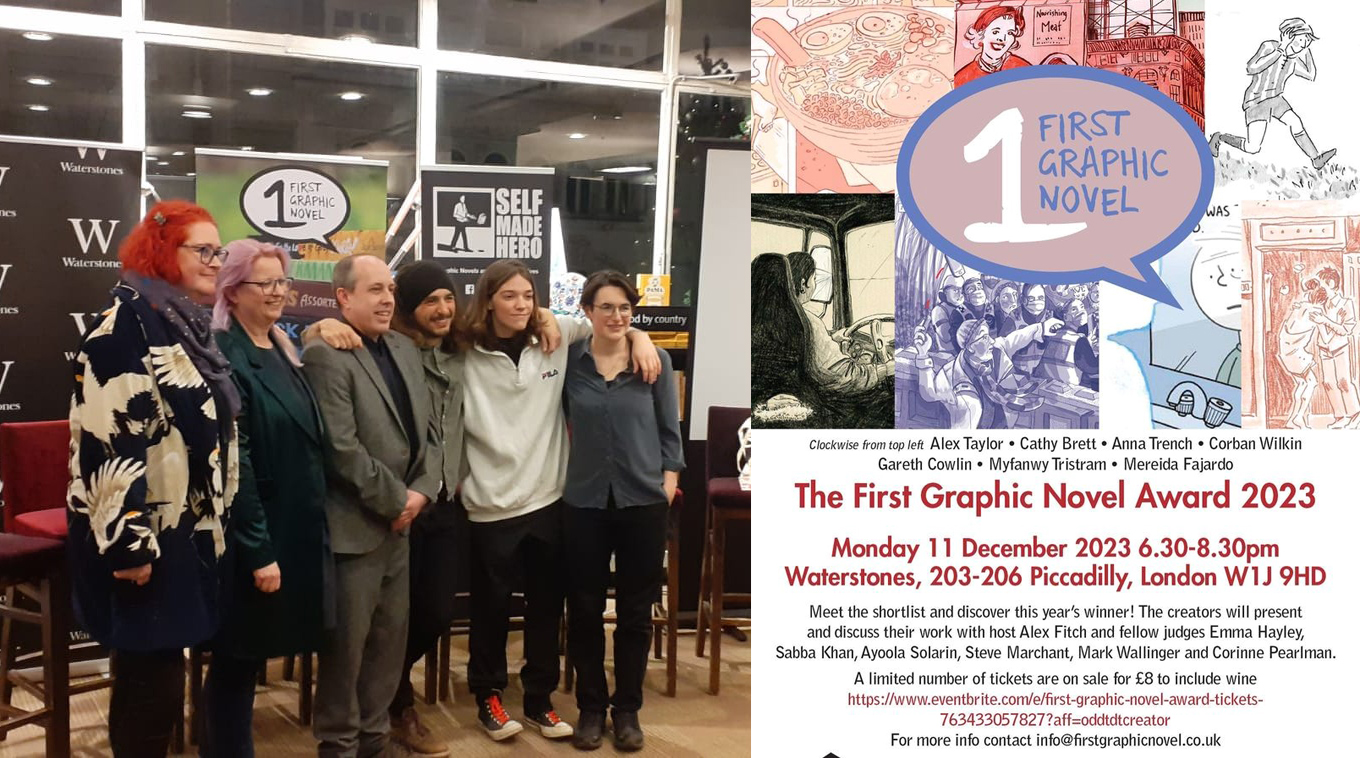
The winner will be announced at Waterstones Piccadilly on Monday 11 December 2023.
Tickets available at Eventbrite.

Filed under: comics, comics theory, graphic novels, my comics, writing | Tags: books, comics, fiction writing, graphic novels, writing, writing theory
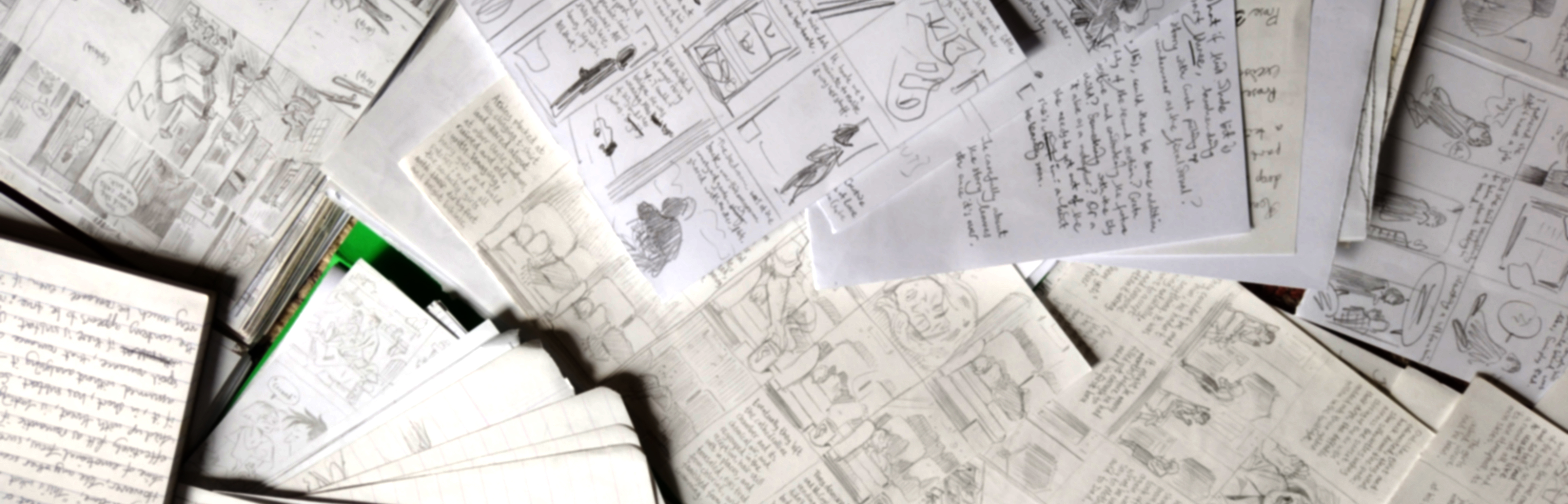
Sometimes your favourite bits of writing aren’t a good fit for the story…
When I’m writing a graphic novel and I find something that works, there’s this tendency to ‘over-write’. One small element of a story will suggest a side story or something in a character’s past, and when I sense that there’s something there, I’m almost obligated to follow it.
Writing fiction is a weird process.
Doing it at all seems to require entering a sustained state of lateral thinking. Finding something that really works, that takes on a life of its own and gets up and starts walking around, feels so miraculous when it occurs that you sort of have to let it do its thing and see what happens. What can happen is you end up with stuff in a story that does something effective in its own right, but doesn’t actually benefit the story as a whole.
A result of these tangents is that you can end up with a large project that appears complete but still doesn’t feel fit for sharing. At least three times now, I’ve experienced the immense relief of cutting a big chunk of material out of a larger work, and realising that it never really belonged there, that it was getting in the way of the real story.
The stories I love the most are very simple, but suggest deeper things going on just before, just after, just off-camera, just under the surface. Explicitly expanding a story too much robs it of mystery or space for the reader’s mind to work in. You have to cut the part to save the whole.
Cutting something out of a story can be agonising.
When you’ve found something good, you’re desperate to hang on to it, even when doing so doesn’t make sense. You can’t discard something that you like this much, you think, and you rationalise keeping it in by convincing yourself that it makes the larger work ‘eclectic’ in some vaguely-defined way. Some writers can do ‘eclectic’ and make it work to brilliant effect, but don’t you just hate it when you’re enjoying a book, and a new chapter starts, and the viewpoint changes, and suddenly it’s about something else? ‘Hey,’ you think, ‘I was enjoying that.’
So to convince myself to remove these parts that I like but which weigh down the larger work, I have to ‘save’ them in some way, to gain some kind of closure and move on from a story that’s still living in my head. They have to expand into their own full story, or stand alone as a short story, to in some way find a final form. Maybe by itself it doesn’t necessarily have a firm ending. Maybe, in the same way you’re trying to acheive for the main work, an excised sub-story like this can sit as a fragment, suggestive of something bigger.
Filed under: amy & kay, comics, drawing, graphic novels, illustration, illustrations, my comics, writing | Tags: art, books, comics, illustration, sketch, writing

There’s a time in your early twenties when you start to realise that you’re not cool anymore.
You start to see all your friends getting real jobs, getting real relationships, moving into nice homes, and meanwhile, you’re still the same punk you’ve been since you were fourteen, the one who all the kids used to think was the coolest person in your local town, the one who everyone used looked up to, the one who always knew where to find a good time, but now you’re twenty-five and all of a sudden it seems like no-one cares anymore.
At least this is what it’s like for Amy and Kay. Life used to be so simple, but now it feels like everything’s slipping away. And when the painfully uncool Laura inserts herself into Amy’s life, it becomes painfully obvious that adulthood has arrived, and if Kay chooses to ignore it, who knows where she might end up…
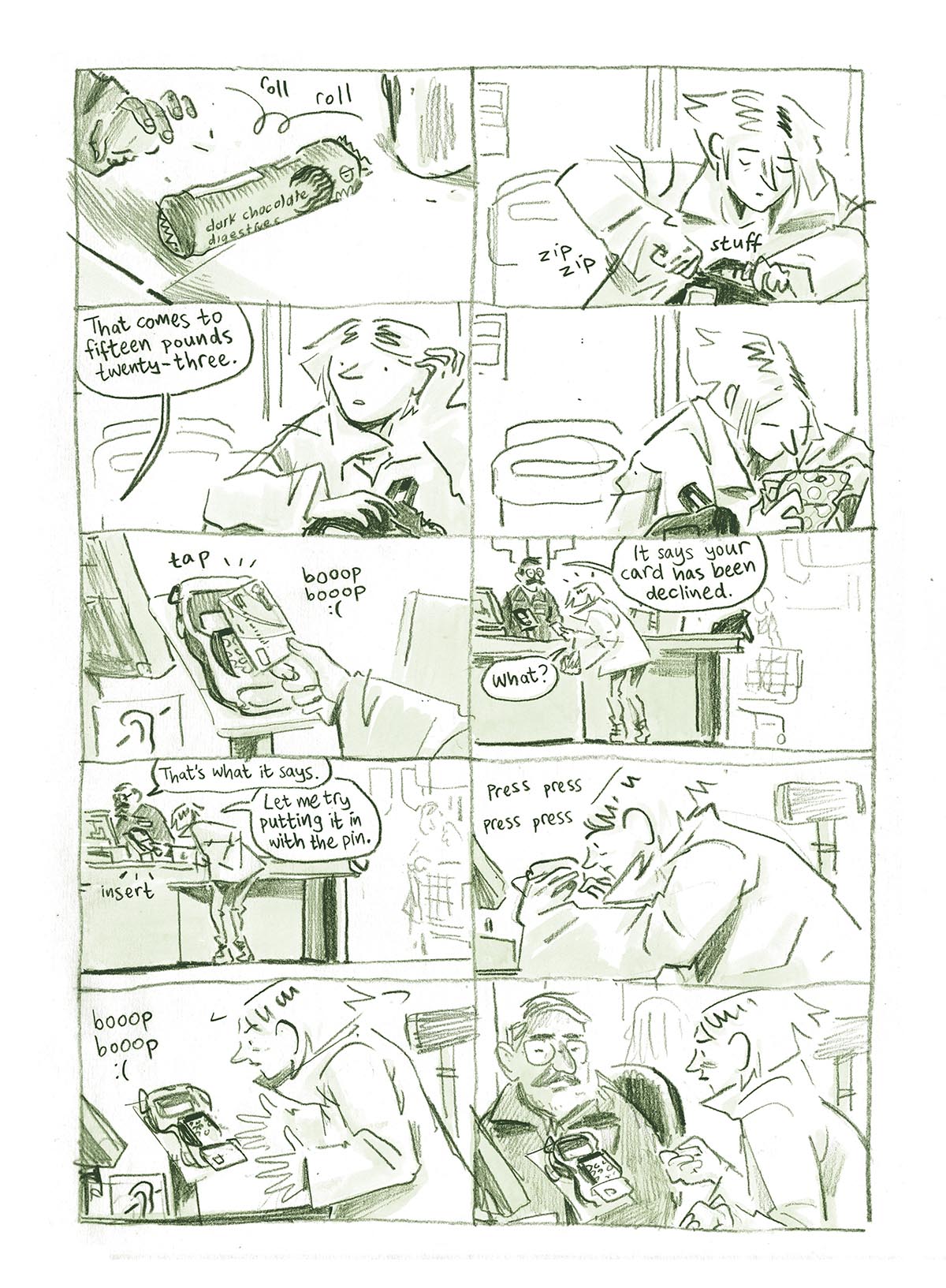
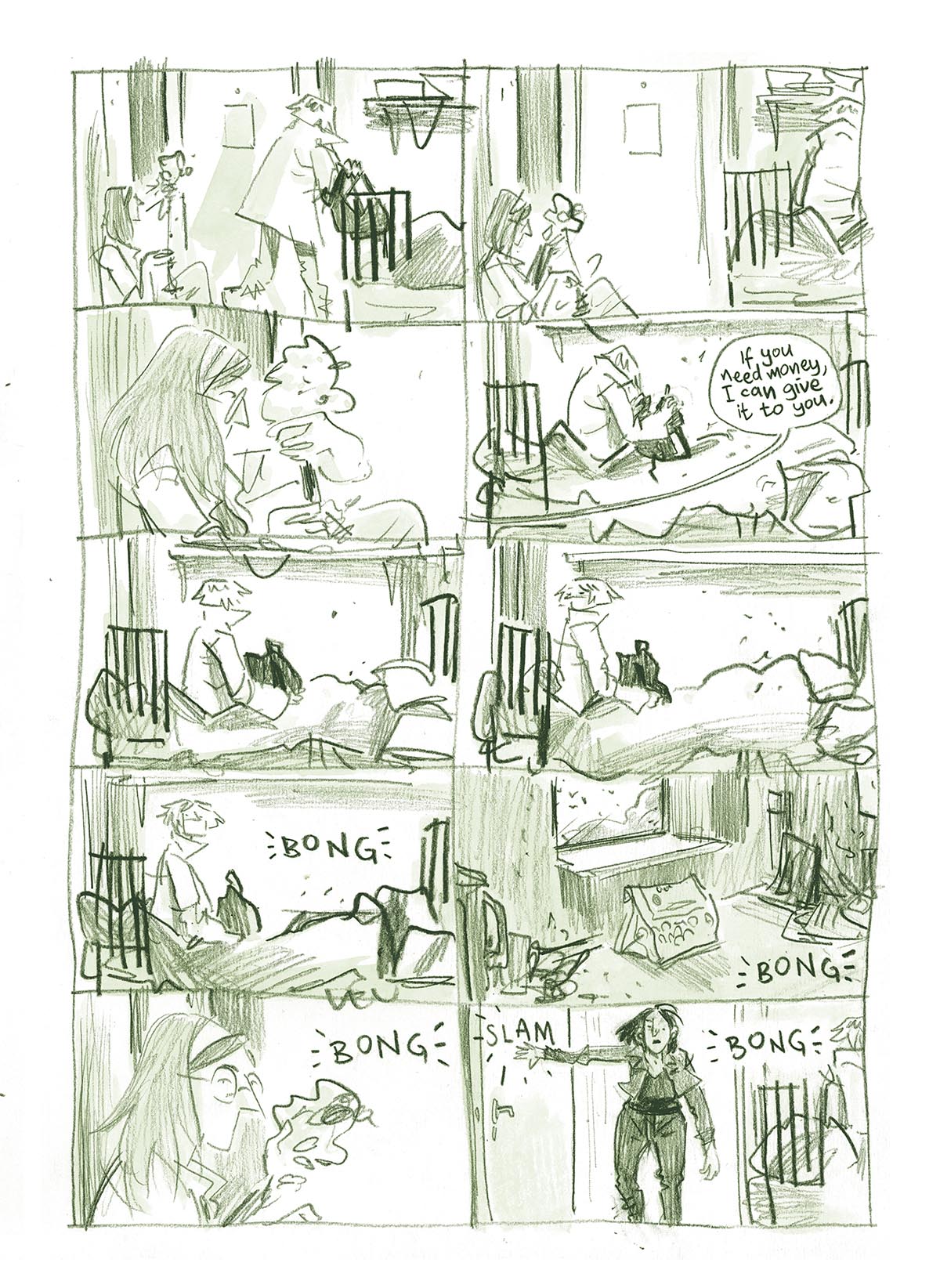
I’ve been drawing this thing with a 4B pencil for a year or so now, fitting it in to spare days and watching it grow. As it nears completion, I thought I’d share a short scene from the second chapter. I’ve been gradually working on several graphic novels over the last few years. Call me scatterbrained, I can never seem to focus exclusively on one project. But Amy & Kay is getting close to completion at around two-hundred pages, and I can’t wait to share the complete story with everyone who’s ever wondered if they’re about to be left behind.



Filed under: amy & kay, comics, drawing, graphic novels, illustration, illustrations, my comics, writing | Tags: art, books, cartoons, comics, graphic novels, illustration, sketch

The great cartoonist Seth subtitled his brilliant Wimbledon Green with the words, “A story from the sketchbook of the cartoonist Seth.”
Wanting an excuse to make some fun comics just for himself, he decided to put aside a bit of time each morning to draw a little comic in his sketchbook. Without planning ahead, he drew what came most naturally to him, and gradually a story emerged, eventually ending up as the complete book.
I’m working on something with a similar approach: a graphic novel called Amy & Kay.
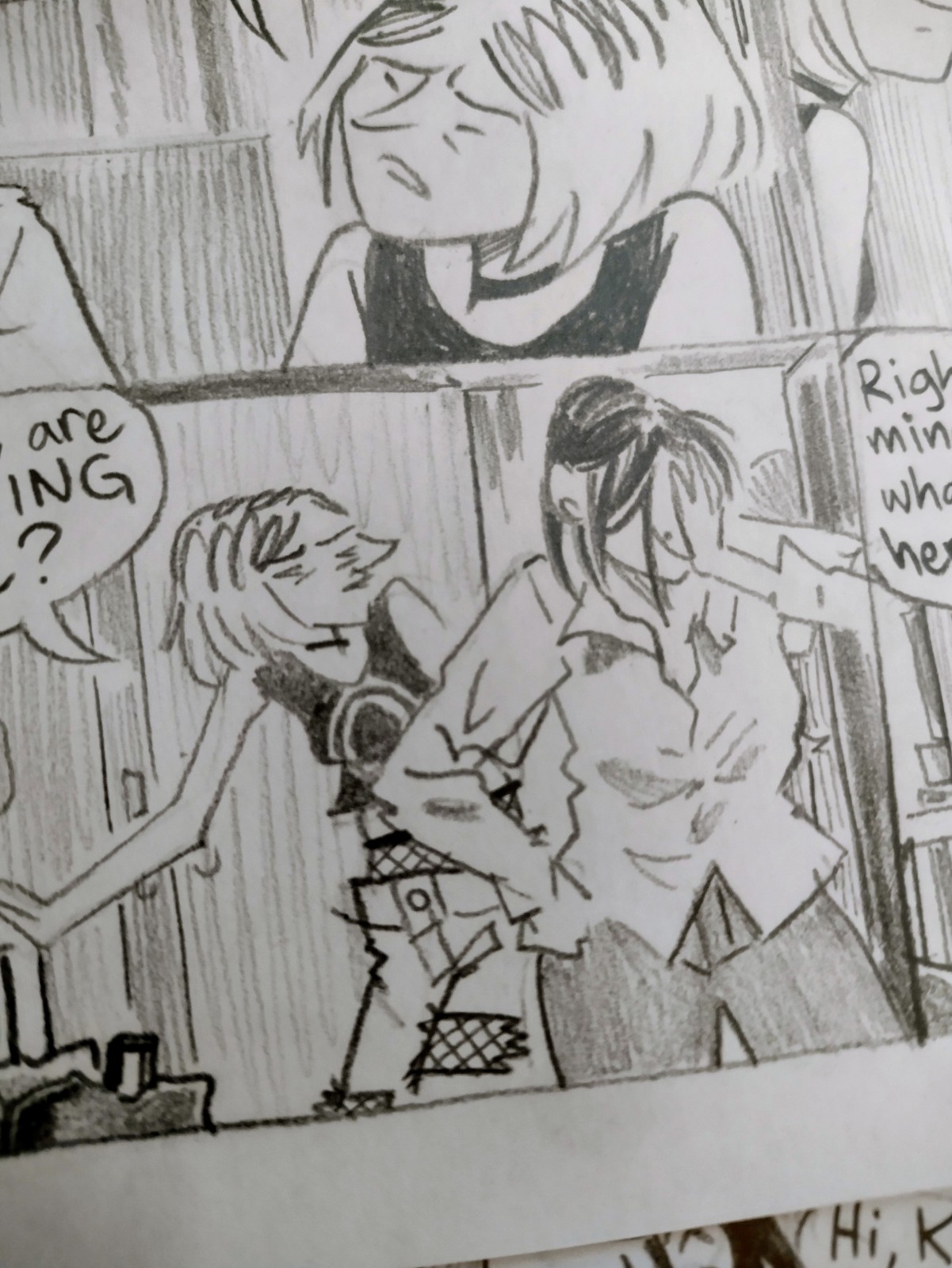
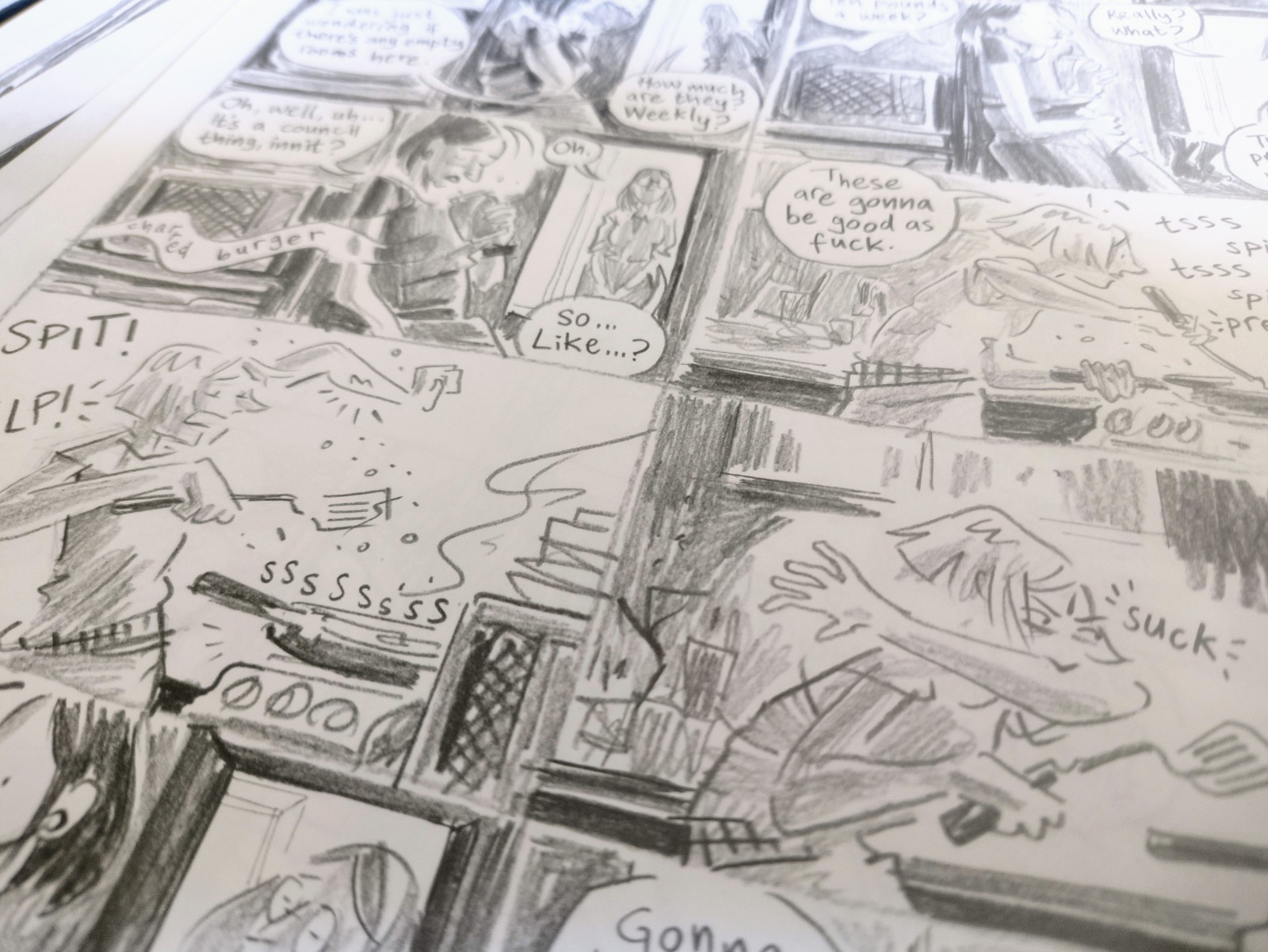
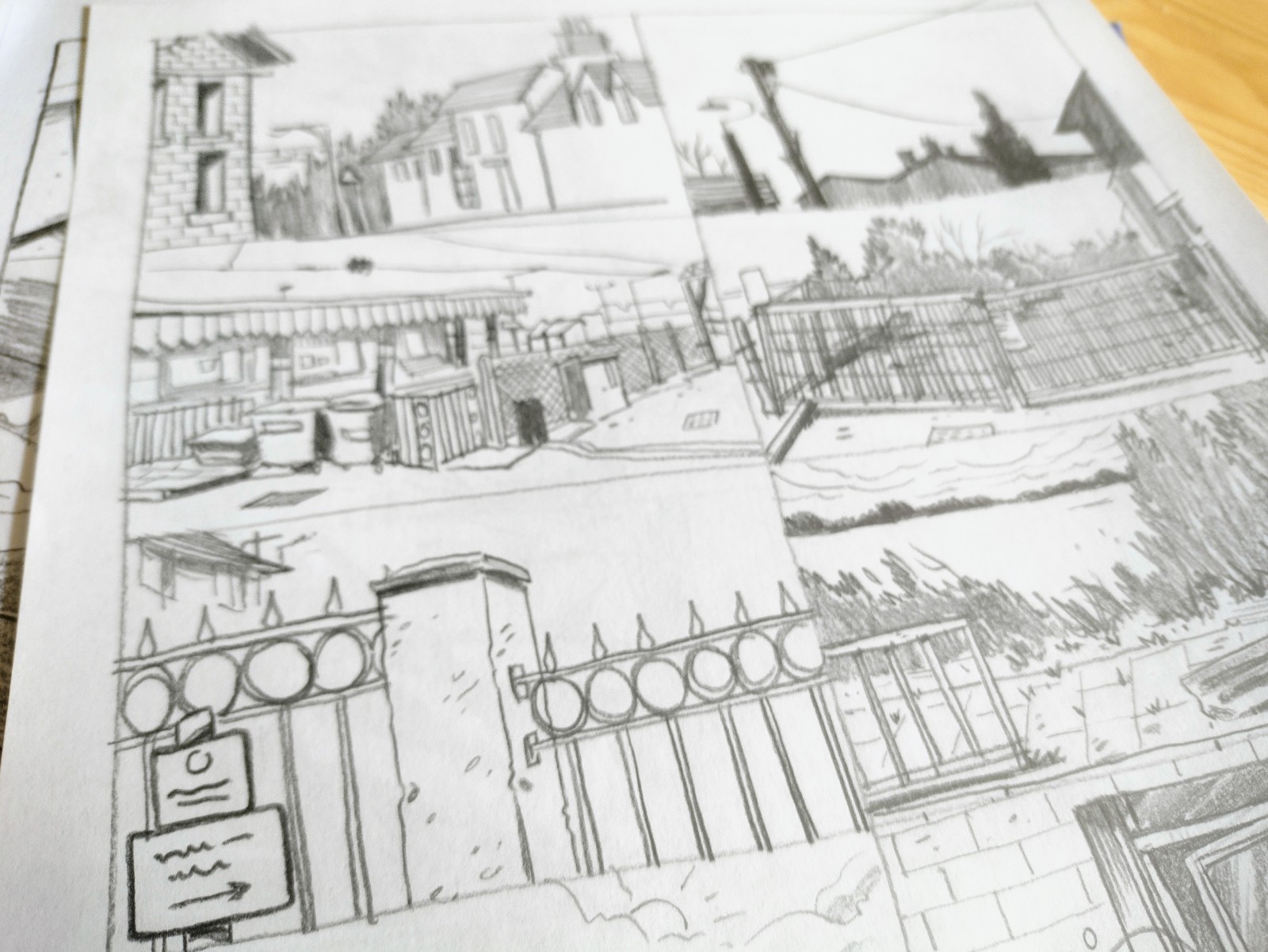
Every page of this comic is drawn without any under-drawing. It’s just me and a pencil, drawing it as I go along.
Working this way permits a lot of spontaneity to come out in the drawings. The standard way of drawing comics, and the way I’ve usually done it (as detailed in my last post), is to create a careful underdrawing and then ink over the top of it. This is a tried-and-true method that’s served people well for countless great comics, but the results can look a little overwrought, and lacking in the focus and emotional immediacy that a spontaneous drawing can give to a character’s expression and gesture.
When I noticed that a lot of my sketchbook drawings and doodles were stronger than my more careful illustrations, I knew I had to find a way to make my comics more like my sketches.
I’m quite deep into this book, and I’m starting to see the result: a story in pictures where the drawings may not be technically perfect, but where the immediacy of the drawing hangs together in a natural way and seems to give more life and character to the story than I’ve managed to acheive before.
More info on the book coming soon! Until then, here’s a few snapshots from the drawing board in the last few weeks.




 Corban Wilkin