Filed under: amy & kay, comics, drawing, graphic novels, illustration, illustrations, my comics, writing | Tags: art, books, comics, illustration, sketch, writing

There’s a time in your early twenties when you start to realise that you’re not cool anymore.
You start to see all your friends getting real jobs, getting real relationships, moving into nice homes, and meanwhile, you’re still the same punk you’ve been since you were fourteen, the one who all the kids used to think was the coolest person in your local town, the one who everyone used looked up to, the one who always knew where to find a good time, but now you’re twenty-five and all of a sudden it seems like no-one cares anymore.
At least this is what it’s like for Amy and Kay. Life used to be so simple, but now it feels like everything’s slipping away. And when the painfully uncool Laura inserts herself into Amy’s life, it becomes painfully obvious that adulthood has arrived, and if Kay chooses to ignore it, who knows where she might end up…
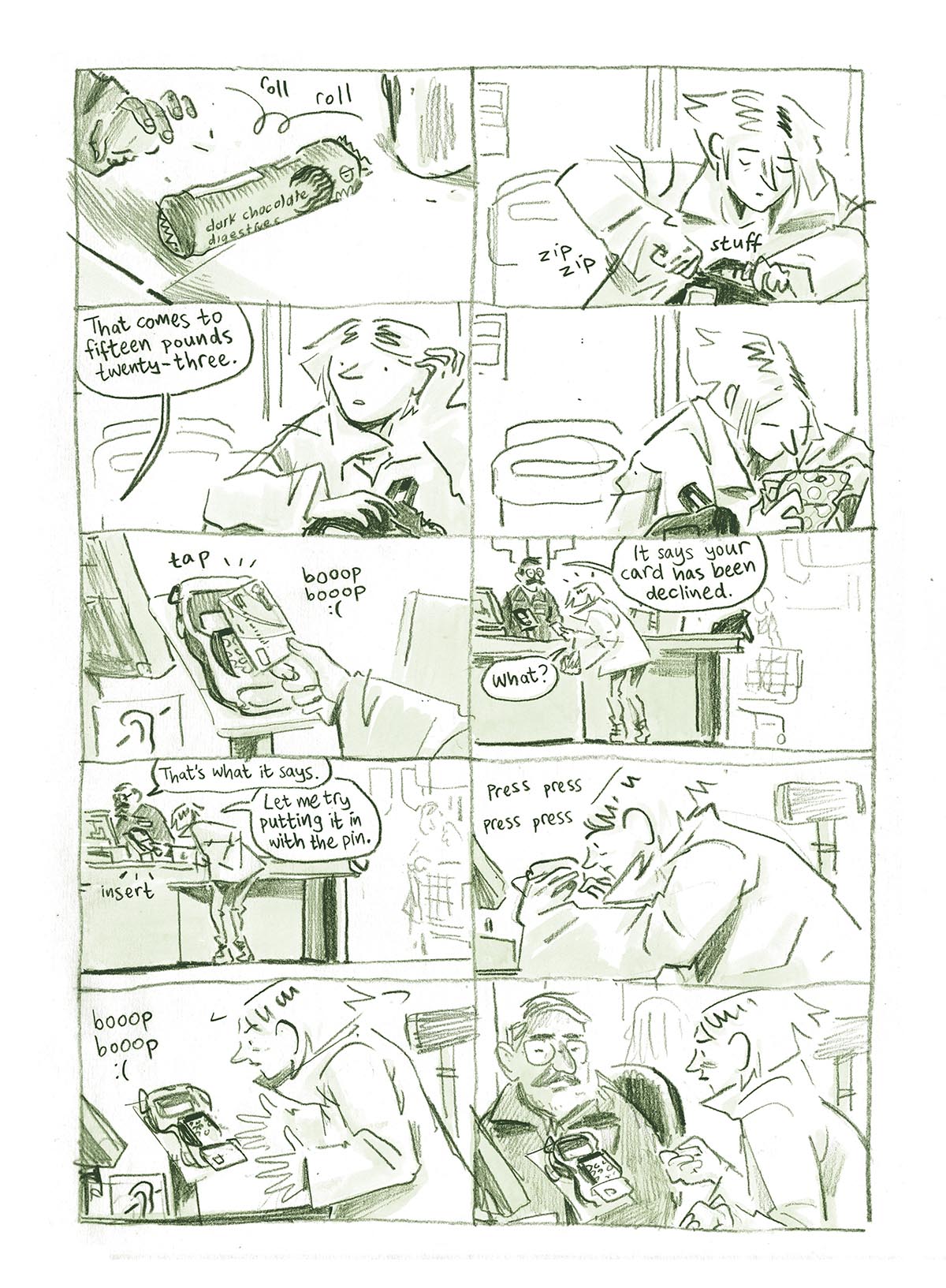
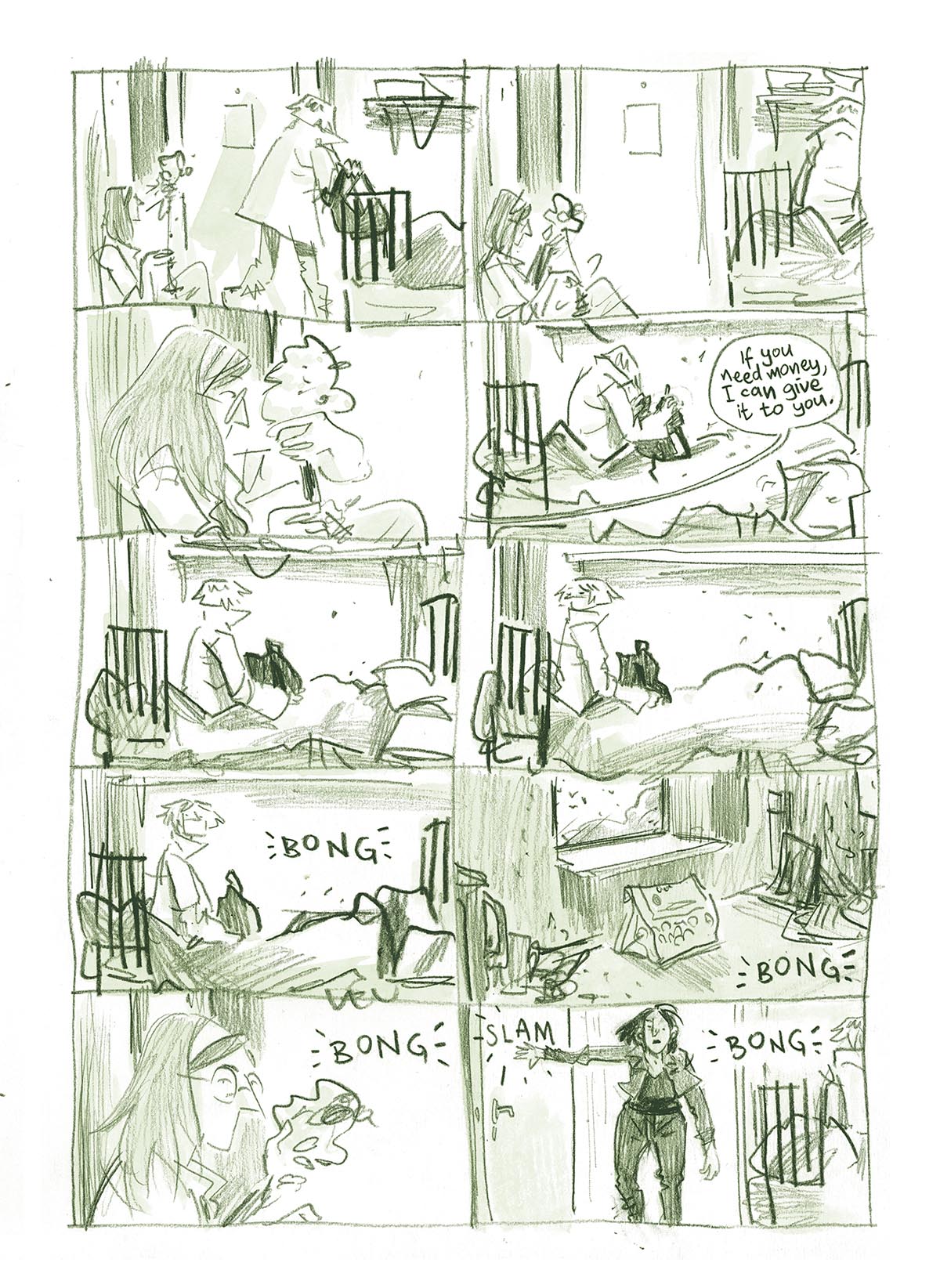
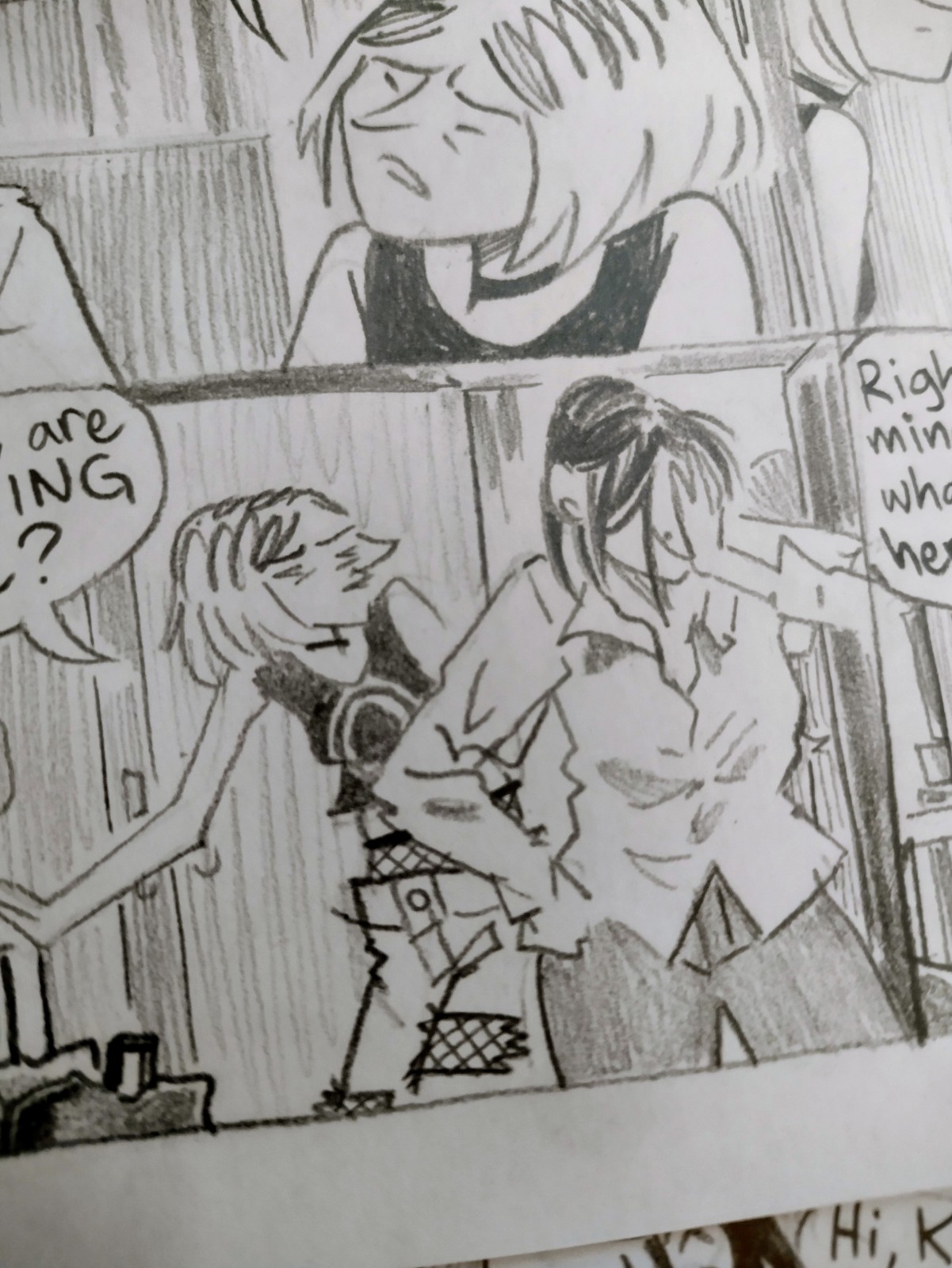
I’ve been drawing this thing with a 4B pencil for a year or so now, fitting it in to spare days and watching it grow. As it nears completion, I thought I’d share a short scene from the second chapter. I’ve been gradually working on several graphic novels over the last few years. Call me scatterbrained, I can never seem to focus exclusively on one project. But Amy & Kay is getting close to completion at around two-hundred pages, and I can’t wait to share the complete story with everyone who’s ever wondered if they’re about to be left behind.



Filed under: amy & kay, comic artists, comics, comics theory, drawing, drawing theory, faith in strangers, graphic novels, my comics | Tags: art, art theory, cartoons, comic strip, comics, drawing, graphic novel, graphic novels, how to draw, illustration, making comics, wab sabi, writing
“Nothing lasts, nothing is finished, and nothing is perfect.”
Comics has a spontaneity problem.
Chris ware said that, unlike writing prose or playing music, it isn’t really possible to get into a creative flow when making comics, that the technical demands are too complex and the rate of creation too slow.

The classic way of drawing comics is pretty convoluted. Script, thumbnails, roughs, underdrawing, inking. In fact, almost all comics were traditionally made by teams of three, four, five, or more people all doing their own separate bit to cobble it together.
But what really matters? I care about dialogue and relationships between characters more than anything. Do I care about comics having stunningly beautiful artwork? Well, yes, to an extent. But most of the time, artwork that is too involved, too complex and eye-catching, actually distracts the reader from the story. In a comic, the drawings should be in the service of the story, not in the service of themselves. So when we agonise over every panel, trying to make it a work of art in its own right, we may actually be doing more harm than good.
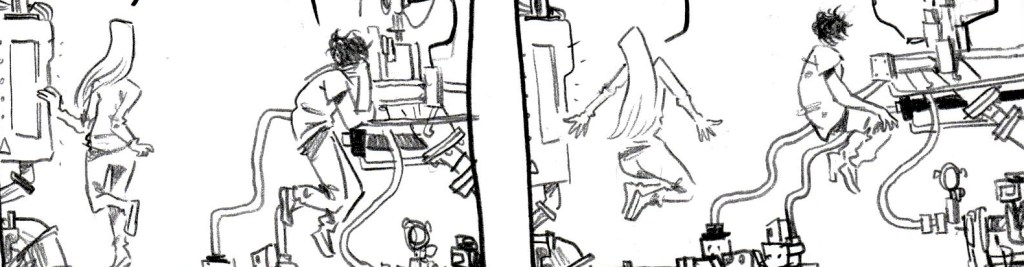
In trying to find a way to make art without being neurotic about it, I’m making myself work in ways that force me to embrace imperfection. The way I see it, however hard one tries, the result is bound to contain imperfections.
In fact, the acheivement of ‘perfection’ in art is asymptotic, i.e. you can approach it, but never reach it, and as you get closer, exponentially more energy is required to make further progress.
Or in other words: the first 90% requires 10% of the work, and the last 10% of the work requires 90% of the effort.

So maybe it’s better to embrace imperfections rather than engaging in the desperate struggle to overcome them all.
I’m starting to realise that the attempt to iron out all kinks in a piece of writing or drawing is mostly a barrier to progress.
Wabi-sabi is a concept originating from Japan that embraces the transience and necessary incompleteness of anything humans create. Starting from this idea leads one to principles of simplicity and finding natural approaches to creation.
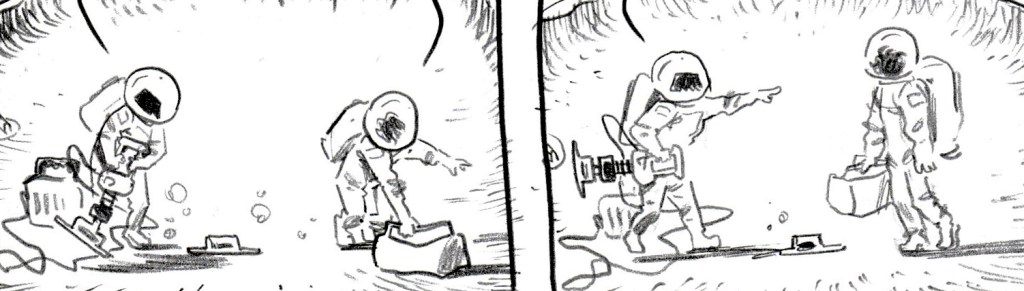
I’m having a go at drawing comics with the most natural approach that I possibly can. Two projects I’m currently working on, my graphic novel Amy & Kay and a daily comic strip Faith in Strangers, are both drawn in pencil without much planning or any underdrawing, and with the intent to embrace imperfection as far as I can bring myself to do so.
When things go right, drawing this way looks more spontaneous and interesting than any laboured-over drawing. When it goes wrong, it’s imperfect, but somehow hangs together with everything else, and balances with the parts that are more successful or complete.
Make the unfinished and imperfect nature of the work part of its essence, like a painting with areas of blank canvas, or a song that cuts off in the middle of the climactic moment.

Filed under: amy & kay, comics, drawing, graphic novels, illustration, illustrations, my comics, writing | Tags: art, books, cartoons, comics, graphic novels, illustration, sketch

The great cartoonist Seth subtitled his brilliant Wimbledon Green with the words, “A story from the sketchbook of the cartoonist Seth.”
Wanting an excuse to make some fun comics just for himself, he decided to put aside a bit of time each morning to draw a little comic in his sketchbook. Without planning ahead, he drew what came most naturally to him, and gradually a story emerged, eventually ending up as the complete book.
I’m working on something with a similar approach: a graphic novel called Amy & Kay.
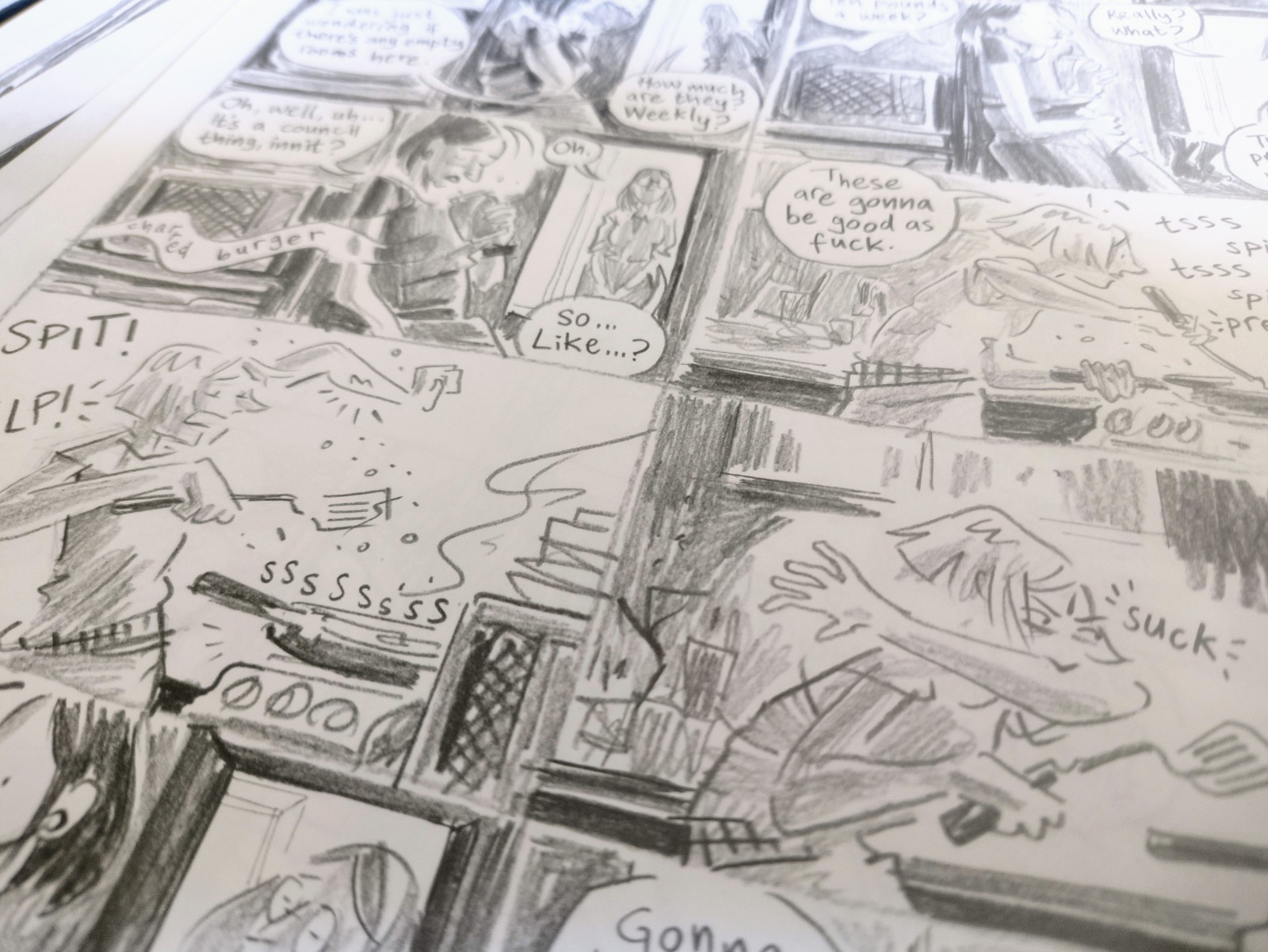
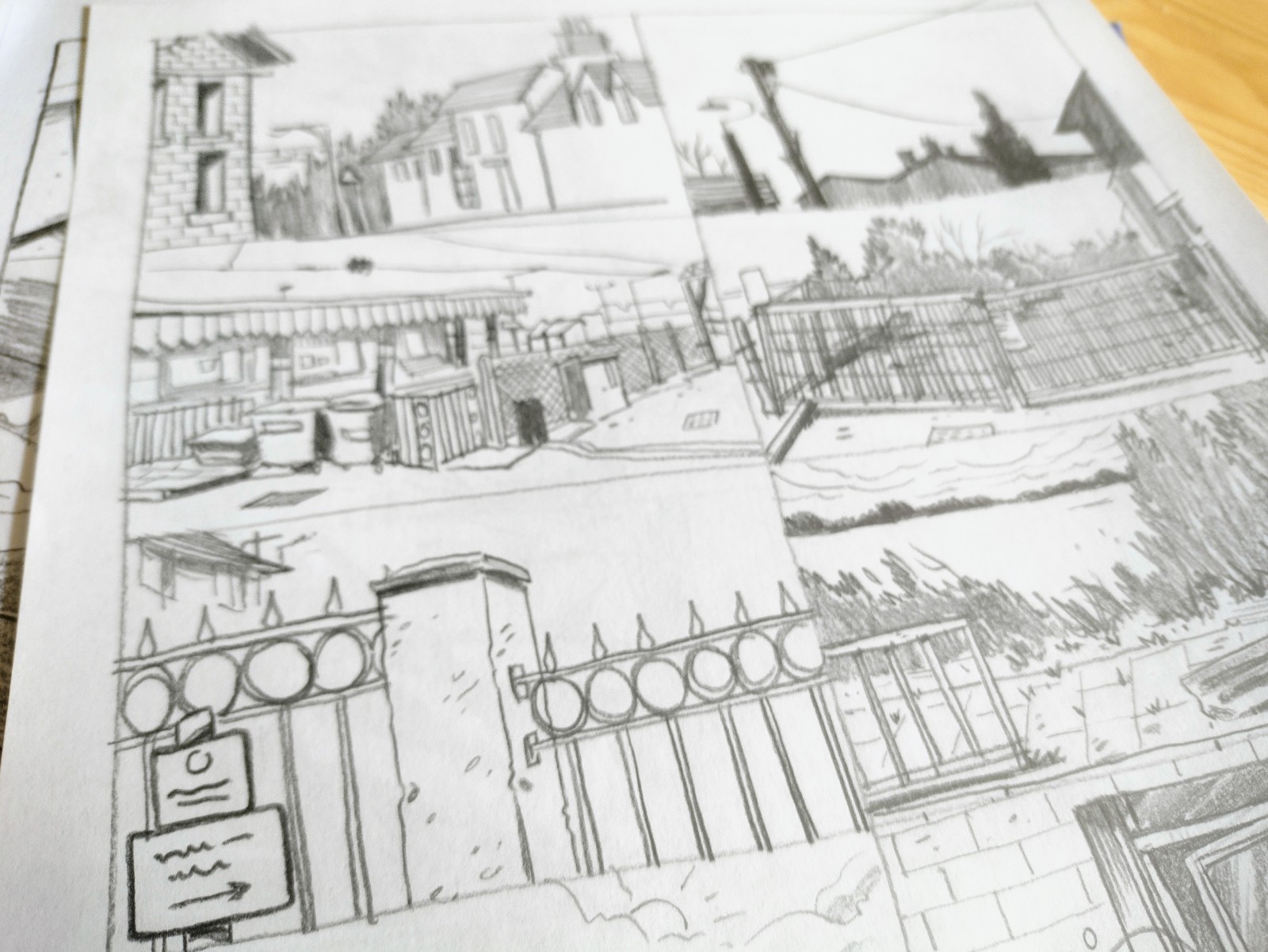
Every page of this comic is drawn without any under-drawing. It’s just me and a pencil, drawing it as I go along.
Working this way permits a lot of spontaneity to come out in the drawings. The standard way of drawing comics, and the way I’ve usually done it (as detailed in my last post), is to create a careful underdrawing and then ink over the top of it. This is a tried-and-true method that’s served people well for countless great comics, but the results can look a little overwrought, and lacking in the focus and emotional immediacy that a spontaneous drawing can give to a character’s expression and gesture.
When I noticed that a lot of my sketchbook drawings and doodles were stronger than my more careful illustrations, I knew I had to find a way to make my comics more like my sketches.
I’m quite deep into this book, and I’m starting to see the result: a story in pictures where the drawings may not be technically perfect, but where the immediacy of the drawing hangs together in a natural way and seems to give more life and character to the story than I’ve managed to acheive before.
More info on the book coming soon! Until then, here’s a few snapshots from the drawing board in the last few weeks.




 Corban Wilkin